
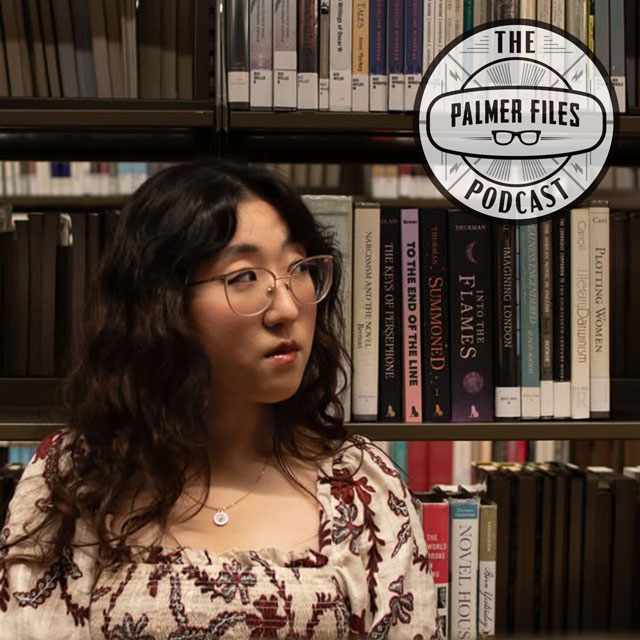
Episode 167 with Jamie Ryu who is on the show to pull back the curtain on the publishing industry.
Plus her own journey to starting a company bridging the gap between traditional publishing and self-publishing, and much much more.
Mentioned and Helpful Links from This Episode
Other Links
About Alex (or Big Chill 2.0) Gets it Right when Tearing Down Fake Online Friendships
I’m Damn Glad Tim Matheson Wrote His Autobiography
Music created and provided by Henno Heitur of Monkey Tongue Productions.
–End Show Notes Transmission–
–Begin Transcription–
00:00:00:03 – 00:00:18:51
Agent Palmer
Previously on Agent Palmer.com about Alex gets it right when tearing down fake online relationships. I’m damn glad Tim Matheson wrote his autobiography and Jason will be back soon to fill in some of the gaps from our meandering conversation. This is The Palmer Files episode 167 with Jamie Ryu, who was on the show to pull back the curtain on the publishing industry.
00:00:18:52 – 00:00:29:49
Agent Palmer
Well, just a little bit. Plus her own journey to starting a company. Bridging the gap between traditional publishing and self-publishing and much, much more. Are you ready? Let’s do the show.
00:00:29:54 – 00:00:44:09
Jamie Ryu
We’re bridging a gap kind of between self-publishing and traditional publishing. I decided I wanted to become an editor when I was very young. I decided when I was like 13.
00:00:44:14 – 00:00:57:45
Jamie Ryu
We’re in a creative field, so I don’t think that we should be really cutthroat about anything, because at the end of the day, it’s not that serious. We’re making books.
00:00:57:50 – 00:01:09:25
Jamie Ryu
Acquisitions editor positions are the most sought after. They are the most competitive, and they’re also the ones with the least work life balance.
00:01:09:30 – 00:01:34:53
Agent Palmer
Hello, and welcome to The Palmer Files. I’m your host, Jason Stershic, also known as Agent Palmer. And on this 167th episode is Jamie Ryu. This episode is one I have been excited to share since we recorded it, because I had questions and have had questions regarding books and their publishing for a long time, and while this is not definitive by any measure, it was both eye opening and educational for me, and this is why I am so excited to share it with you.
00:01:34:58 – 00:01:59:12
Agent Palmer
The process of a book being selected and what happens for it to come to your local bookstore? We talk about it burnout. In an industry with little work life balance. We talk about it. Permission to give feedback, other options, a better way forward. Unlike Fight Club, we talk about it. But before we get there, remember that if you want to discuss this episode as you listen to afterwards, you can find all related ways to contact Jamie and myself in the show notes.
00:01:59:16 – 00:02:25:07
Agent Palmer
You can see all of Jamie’s stuff at Jamie is reading.com. That’s Jamie is reading.com or learn more about contrarian publishing at Contrarian publishing.com. As always, don’t forget you can see all of my writings and rantings on Agent Palmer, Dot com. And of course email can be sent to the Palmer files at gmail.com. So without further ado, let’s get into it.
00:02:25:12 – 00:02:58:50
Agent Palmer
Jamie, you are in publishing. And you have been in publishing and as, a very big reader and a blogger and a podcaster, I just want to say you are a unicorn. I have I’m a curious person. I think that comes from being a reader and a blogger and a podcaster. But I have reached out to small publishers, large publishers, and no publisher wants to talk to me.
00:02:58:55 – 00:03:16:16
Agent Palmer
I don’t know if it’s because everyone’s always so busy or, like, we don’t talk about. Is it like Fight Club? Like publishing? Like nobody. I’ve talked to authors, I’ve talked to literary agents, I’ve talked to editors. Publishing’s the what? You’re the one I’ve been missing as far as the whole process.
00:03:16:29 – 00:03:43:23
Jamie Ryu
I mean, honestly, it’s probably a little bit of some of it’s probably a little bit of a Fight Club thing. And then some of it is like busy, busy, busy. There’s a lot to do on the publishing side of things. It’s really not just one job. And so that’s probably a large part of it. And another part of it is, you know, we’re not really in the business of promoting ourselves.
00:03:43:23 – 00:03:45:12
Jamie Ryu
We’re in the business of promoting our books.
00:03:45:17 – 00:04:17:19
Agent Palmer
That’s true. I, I just reach out because I’m I’m curious about the process. I, I helped, a friend of mine self-publish a book of poetry. And I know he went before we did that. Obviously, we went through the submission process, and I’ve heard from other people about the submission process, but I genuinely and I say this with I guess, as little ignorance as I could possibly have, I have no idea what publishing means anymore other than like some people get book deals and some people don’t.
00:04:17:19 – 00:04:29:51
Agent Palmer
But like, there’s all these books that come out and I know they’re not all self-published, but I’m just like, I don’t know. I don’t know what happens. Like, I guess, like, let’s start from the what is a publisher do.
00:04:29:56 – 00:05:01:13
Jamie Ryu
Yeah. So I mean, a publisher is essentially the entity that is responsible for getting books onto the shelves. It’s kind of the whole, it encapsulates everything. So let me kind of go through. Okay. You’re an author. You’ve written a book. I’m sure you and and hopefully your listeners are familiar with it. As an author, if you want to get a larger publisher, you’re going to need to get an agent.
00:05:01:13 – 00:05:20:55
Jamie Ryu
So you need to query the agent. Yes, I do that for a very long time. And then if you manage to get an agent, the agent goes on submission. This is where the publishing house comes in. So once the agent is on submission, then the book gets submitted to editors. So these are acquisitions editors that work inside a publishing house.
00:05:20:55 – 00:05:52:00
Jamie Ryu
And essentially they are the people curating what the publisher is going to release into the world for, for public consumption. So an editor will evaluate the merits. You know, in terms of does it fit the market? Is the writing good? Does this person seem like they’re going to be okay to work with? And they will then bring it to the, the team.
00:05:52:05 – 00:06:04:38
Jamie Ryu
So you’ll bring to an acquisitions meeting. The acquisitions meeting consists of marketers. It consists of publicists. It consists of, sales reps. That’s a big one. Sales reps.
00:06:04:49 – 00:06:07:15
Agent Palmer
And that’s different from marketing.
00:06:07:20 – 00:06:08:25
Jamie Ryu
Yes. Yes. Very often.
00:06:08:36 – 00:06:09:19
Agent Palmer
Okay.
00:06:09:24 – 00:06:35:42
Jamie Ryu
And then finance is there too. And the publisher is there. So when you say publisher, it’s kind of there is one person who is the publisher. But then there’s, you know, the publishing house as a whole. Okay. So ultimately speaking, the publisher gets the final say, but all of these different departments weigh in on whether or not the editor is able to acquire this title.
00:06:35:47 – 00:06:50:07
Agent Palmer
Okay. And then is it just because you’ve you’ve used the word editor? Yes. Is the editor, the acquisitions editor, the editor of the book, or is that potentially a different person after acceptance.
00:06:50:11 – 00:07:16:36
Jamie Ryu
So it would be the the acquisitions editor would be the editor of the book, but not for all types of editing. It would be primarily the developmental editing stage that the acquisitions editor is involved in. Okay, so it would be, it depends on the House again, but especially at larger houses, line edits and copy edits is a different team of people.
00:07:16:36 – 00:07:44:09
Jamie Ryu
So it’s production editors or it’s managing editors or it’s freelance copy editors coming in. So hopefully an an author is going to stay with that one editor for the whole process. Obviously publishers have turnover where, you know, editors leave, come and go, whatever. So in that case, the book could be reassigned to another editor. But generally speaking, your acquisitions editor would be the person shepherding you through the whole thing.
00:07:44:14 – 00:07:44:33
Jamie Ryu
Okay.
00:07:44:34 – 00:07:52:09
Agent Palmer
That’s that’s I mean, so so far I’m understanding a lot more of why it’s a publishing house.
00:07:52:14 – 00:07:53:01
Jamie Ryu
Yeah.
00:07:53:06 – 00:08:23:33
Agent Palmer
So that makes a lot more sense. And then it is, is there a reason? And we’ll get into what you’re doing now, but is there a reason that there’s a even a small percentage of the. We don’t talk about this, and I only bring it up because and I’ve said this before on the podcast and I’ve said it to many, many people, books is the one that, you know, movies have DVD extras that explain how this movie came to be.
00:08:23:33 – 00:08:49:52
Agent Palmer
Maybe not necessarily how the script was written, but like, you know, this is what we did for camera and this is how we shot this and all that kind of stuff. And we’ve seen enough of, like VH1 Behind the Music. So they they kind of go and there’s deep dives into albums and we understand how a music album is made and, and even to a certain extent, I guess most podcasts, especially like mine, where you’re talking, you genuinely eventually listen to 20.
00:08:49:52 – 00:09:16:57
Agent Palmer
Any 20 episodes you’ll discover kind of a little bit about my process and how it works. Write books like, genuinely, somebody writes a manuscript and it gets published, and what’s in between? There is it’s not as readily available as all three of the other things I’ve said. And I, to me as a reader, like, I want to know, like, I’m, I’m curious, I want to know the behind the scenes because I can find the behind the scenes for every other medium.
00:09:17:10 – 00:09:49:00
Jamie Ryu
Honestly, I, I think the books are a little different than the other things that you’ve mentioned, primarily because it’s an industry that has really, really, really tight margins. Overall, it is one of those places where, you know, most unless you’re like a really, really big publisher, you’re not raking in money. And so it’s difficult to really kind of give those extras.
00:09:49:00 – 00:10:17:53
Jamie Ryu
And I feel very interestingly that in publishing there is a certain lack of wanting to give credit where credit is due to the team of people. You know, part of that may be the high turnover rate. Part of it may be just that’s the way it’s always been something in there. But there are a lot of houses where you have no idea who the marketer on the book was.
00:10:17:53 – 00:10:38:12
Jamie Ryu
You have no idea who the publicist was. You have no idea who the editor was. Unless the author puts it in the acknowledgments or something like that. It’s not standard for there to be a like a credit section. The way that there is for a movie or, a music video or something like that, which is, is quite unfortunate in my opinion.
00:10:38:12 – 00:10:43:04
Jamie Ryu
It’s one of the things that I challenge a little bit in the industry.
00:10:43:04 – 00:11:15:31
Agent Palmer
How is there any turnover at all then? Because I mean, am I like I mean, so as an example, I’m, I’m a stay at home dad that edits podcasts for a living. But how do I have any more or less, like workable experience in publishing than somebody who’s coming from a house where I guess you could say I did that thing, but like, if no one else is giving you credit and the author didn’t put you in the acknowledgments like, what do you what do you have?
00:11:15:31 – 00:11:20:30
Agent Palmer
Just I spent five years at, I don’t know, insert publisher here and that’s enough.
00:11:20:35 – 00:11:27:57
Jamie Ryu
Yeah. I mean, a lot of it is experience based. A lot of it is the industry is so small that people talk.
00:11:28:04 – 00:11:29:19
Agent Palmer
Okay.
00:11:29:24 – 00:11:37:28
Jamie Ryu
It’s it’s just kind of one of those things, I don’t I don’t know that I want to comment about it. No.
00:11:37:33 – 00:11:38:23
Agent Palmer
No. It’s fine.
00:11:38:23 – 00:11:40:05
Jamie Ryu
It’s there a little bit.
00:11:40:05 – 00:12:08:14
Agent Palmer
Yeah. It’s just it’s just, I mean, it makes a lot more sense now why I didn’t. Everybody was nice, but no one wanted to talk to me. And I’m not like, I’m not trying to get you to, like, crap on the industry. I just genuinely I’m curious. And I think a lot of people who are readers would also kind of see that unless, you know, a personally know an author who will walk you through their experience, but every author’s experience is so unique, I have no idea.
00:12:08:14 – 00:12:31:21
Agent Palmer
And that’s the other thing, I guess, which is, you’ve been in these publishing houses from, I know some authors, and every experience is unique. Is every book like like like, do you do you get to rely on anything, or is it always like, here’s a fresh slate. You have a general idea of what’s next, but everything’s different this time around.
00:12:31:26 – 00:12:48:15
Jamie Ryu
It it really does depend. There are some things that definitely remain the same. A lot of the administrative side of things is always kind of the same, and a lot of the steps that you’re taking within the house are the same. And so let’s kind of go back to what we were talking about earlier. If a publisher signs off, they say yes.
00:12:48:15 – 00:13:10:46
Jamie Ryu
So book now the contracts department is negotiating with the agents to try to get everything set up with the contract. You’ll actually be surprised. Most people will be surprised that in publishing, it is standard to do work before the contract is signed. There are times where the contract is not yet signed and the book is coming out in like six months.
00:13:10:50 – 00:13:23:17
Agent Palmer
What is this? I mean, I yeah, and you don’t have to answer. Is this, is this a genuine, like, like a tact, like a, like a negotiation tactic? Or is it just we don’t have time.
00:13:23:29 – 00:13:48:44
Jamie Ryu
For things really take that long. So publishers and agents are both stretched so thin that, you know, sometimes negotiations go for a really long time, or this or that or, you know, someone, someone left. So then they have to refill the position or whatever it may be. So it’s it’s pretty standard to not have like a find a completely finalized contract.
00:13:48:49 – 00:14:17:17
Jamie Ryu
Before you begin work, usually you work off of what’s called a deal memo. Okay. And so that’s kind of just the standard, like this is the general terms that you’re kind of settling on. The other things are still under negotiation, but these are the things that are set in stone. And from there, again, this is a situation where it’s so messy, you know, maybe the contract get signed in a few months, maybe get signed in a year, like it’s it’s wildly different.
00:14:17:17 – 00:14:22:34
Jamie Ryu
But while you’re waiting on the contract, work can’t stop. So at this point.
00:14:22:39 – 00:14:46:05
Agent Palmer
What’s the what’s the what’s the I guess from from I guess just a general perspective. What’s the rush like? And I don’t, I, you know, I mean, you know what I mean? Like, I’m sure there are enough, submissions, and acceptances that given the ebbs and flows of everything, it should all equal out. Even if we have to wait on a contract.
00:14:46:18 – 00:15:05:52
Agent Palmer
So is there, I mean, to be very specific, is there, we we we have accepted you the the, admissions, the acquisitions editor accepted you. And, like, there’s a ticking clock, and we have to have this book out in X amount of time. Like, how does it start from there? And then obviously negotiating a clock.
00:15:06:01 – 00:15:43:56
Jamie Ryu
Okay. It’s one of those things where publishing takes a really long time. This is something that maybe not everyone knows is if an editor at a big house signs a book tomorrow, that book is probably not coming out until like 2028. Okay. If it’s like a big publisher. So you kind of want to start getting the ball rolling in advance, because as an editor, you not only have all of the books that you are working on for the next like three years laying in front of you, but you also have to take care of all of your backlist titles.
00:15:43:56 – 00:16:14:33
Jamie Ryu
So every title you’ve ever worked on or the House has ever published, you know, like if a house is very old, books from 100 years ago that are still selling still need someone within the house to manage the title. Okay. And so those books get divvied up between the editors that are in the house currently. So editors at any given time are not only dealing with their list and their their curation, they are dealing with books that were published in the 1900s.
00:16:14:35 – 00:16:39:42
Agent Palmer
Okay, so it’s not is there a I mean, I just imagine, like, you know, there are people that maybe and I’m speaking from just, again, ignorance. I’m not in this world at all, but is there a is there a, you know, I, you know, you accept my book and I sit down and you’re like, all right, this is going to come out in three years.
00:16:39:42 – 00:16:53:44
Agent Palmer
And I go, all right, I’m an indie publisher. Like, do people, even though that getting signed is a big deal, do you are you aware of like, I don’t know, like a backlash of, like, I don’t want to wait, I want to I want to get this out now. Like, is there.
00:16:53:44 – 00:17:21:56
Jamie Ryu
Those things would be discussed, prior to the editor really bringing it. Okay. Acquisitions. So usually if an editor is interested in bringing something to acquisitions, they would reach out to the agent and they would have a phone call. Hopefully the agent is tempering expectations on the author’s perspective as well. And honestly, if you’ve gotten an agent, probably you’ve done enough research into the industry to know how long it takes.
00:17:21:58 – 00:17:26:44
Jamie Ryu
Okay. A lot of people, when they’re looking for agents, it takes them years.
00:17:26:49 – 00:17:39:12
Agent Palmer
And agents are, again, as you said, stretched as thin as the editors and publishers and so that it it’s a lot like you might they might talk to you, but they may not have any movement for a while.
00:17:39:22 – 00:17:53:53
Jamie Ryu
Exactly, exactly. When I left the, the big publisher that I was working at, I would say that there was a pile up of submissions that went back at least six months.
00:17:54:05 – 00:18:02:28
Agent Palmer
Yeah. And somebody is it just so the. Is there a separate person who reads that, or is that also the.
00:18:02:32 – 00:18:04:06
Jamie Ryu
That’s the acquisitions editor.
00:18:04:07 – 00:18:07:15
Agent Palmer
So I was also shepherding the books.
00:18:07:20 – 00:18:34:17
Jamie Ryu
Correct. Acquisitions editors do a lot. They are I’m a little biased right. Because that was the the track that I wanted to go. But I think overall the general consensus is acquisitions editor positions are the most sought after. They are the most competitive and they’re also the ones with the least work life balance, because acquisitions editors need to touch every part of the process.
00:18:34:17 – 00:18:58:39
Jamie Ryu
Essentially, what they are doing is not only are they the developmental editors of the book, but they’re also the person within the publishing house that is the primary contact with the author and the agent. So generally speaking, if marketing has something, if, you know, publicity has something, etc., etc., the editor is usually in some way involved in those things as well.
00:18:58:44 – 00:19:29:45
Jamie Ryu
Editors get a large say in like cover design, and things like that. So every cover meeting the editors are there, as well as the designers and the marketers and the and the publicist, etc., etc. and so a lot of their job is communicating between the publishing house and the author. So that is their job in-house. They also need to edit the books alongside copy editing alongside production and editorial.
00:19:29:52 – 00:19:36:48
Jamie Ryu
They are doing passes of the books at that stage as well, even if they are not the primary editor. In terms of building.
00:19:36:51 – 00:19:37:47
Agent Palmer
There’s then.
00:19:37:47 – 00:19:39:39
Jamie Ryu
You need to find new books to acquire.
00:19:39:44 – 00:20:00:41
Agent Palmer
And there’s got to be a lot of burnout, I would assume, like, is that is that the number one burnout position in publishing like that sounds like, I mean, I, I look I like to consider myself, no, I’m thinking I’m less of a reader, but like, I like to think I’m an avid reader and it’s just like I’m to.
00:20:00:43 – 00:20:26:56
Agent Palmer
I don’t even think I could. I’m having trouble as you’re describing it, attributing just one thing, like, oh, I have one book, or I’m reading one book and then I have to edit this other like it’s it’s a lot, but you know, this now and you’re speaking from a place where you’ve been around it. You said you were on a track to become that.
00:20:26:56 – 00:20:29:45
Agent Palmer
But that’s not where you start in the industry, obviously.
00:20:29:47 – 00:20:46:00
Jamie Ryu
No, no. You started as an assistant assistant to, to at least one, usually two, sometimes three acquisitions, editors. Okay. If you are an editorial, obviously it depends on what, you know, department you’re trying to be a part of.
00:20:46:07 – 00:20:58:50
Agent Palmer
And and did you did you like I mean, I guess I’m just going to be as personal as possible. Three months in, you’ve seen everything. Are you like, yes, I still want this.
00:20:58:55 – 00:21:11:28
Jamie Ryu
Yeah. I mean, I interned for a long time prior to, working like a full time job in publishing, so, yeah, I, I knew what I was signing up for, but I, when I got into it.
00:21:11:28 – 00:21:18:21
Agent Palmer
Okay. And I and then, I mean, we’ll skip to the end for a second. Then you founded your own publishing.
00:21:18:25 – 00:21:19:19
Jamie Ryu
I did, yes.
00:21:19:19 – 00:21:37:58
Agent Palmer
And of everything of the base knowledge we’ve just set up for everybody, like, are you able to go like, all right, well, we don’t have to do things the way they’ve always been done. We’re looking for a little more balance. Or now you’re not only an editor, you’re a founder. And, like, now it’s just even worse or busier.
00:21:38:01 – 00:22:18:34
Jamie Ryu
It’s a little bit of both. It’s a little bit of both. Because volume wise, I’m dealing with a lot less, since we’re new. But what I’m looking at is what are the ways that we can make this process more personal, make sure the author is fully involved, try to make it a little bit faster where you can, and really set the author up for success, in terms of advocating for themselves, in terms of marketing themselves, because nowadays authors are absolutely, expected in some ways to market themselves.
00:22:18:34 – 00:22:47:23
Jamie Ryu
It’s not required and it will never really be required. But it’s just kind of a proven fact at this point that the more an author markets themselves, the better the book is going to perform. And so obviously, from a publisher perspective, you are going to kind of want to make sure that an author is willing and able to talk about themselves and, and market and whatever.
00:22:47:28 – 00:22:54:42
Jamie Ryu
But publishers don’t usually give authors a ton of guidance, in that regard. So, so.
00:22:54:47 – 00:23:14:32
Agent Palmer
Let me let me play devil’s advocate for one second. Yeah. You as a publisher decide to buy the Agent Palmer book. I have no idea what this book is, but you buy it, right? But I’m not. And you buy it because you. It’s an amazing book. But I’m not really. I don’t have a podcast, and I don’t.
00:23:14:37 – 00:23:36:14
Agent Palmer
I’m just. I’m just. I’m not a big marketing person. Right. Obviously that then falls on you, but do you buy it because it’s a good piece of work with the expectation that it won’t quite sell because I’m being I’m, you know, I’m not getting out there or like, is there a balance based on, like,
00:23:36:18 – 00:24:05:45
Jamie Ryu
Okay. So my company works differently than a traditional publishing company does. So my company is much more akin to like, indie publishing, like self-publishing. Okay. We kind of like to talk about it as we’re we’re bridging a gap kind of between self-publishing and, and traditional publishing in a lot of ways. From a traditional publisher standpoint, I would say if we do not think the book is going to sell well, we will like and make back the investment.
00:24:05:50 – 00:24:26:49
Jamie Ryu
It would not be signed, so it would be based on a myriad of factors. It would be looking at the market. How does this book typically perform? Is it nonfiction or is it fiction? If it’s nonfiction, having a platform of some kind is much more important than in fiction, okay. Because in fiction you can kind of, you know, create buzz and hype around the story.
00:24:26:54 – 00:24:53:47
Jamie Ryu
But in nonfiction, if the story is a person, then the person needs to be interesting. Yeah. And not, for lack of a better term. Yeah. So for fiction, there’s much more looking at what is selling right now. What is Barnes and Noble saying. They want, you know, on their shelves. What are they seeing sell a lot of what is Amazon saying sells a lot of you know, what kind of has been proven already to be a moneymaker.
00:24:54:00 – 00:24:59:07
Jamie Ryu
And can we capitalize on that? That is kind of the way you want to look.
00:24:59:07 – 00:25:20:37
Agent Palmer
At it, but it I don’t know, it sounds really hard to capitalize on it when even it even if you were going as fast as possible, that book is not going to be on the shelf, you know, for a month if it’s not a year. Right. Like, so that’s, that’s a pretty big is it is it is is it a gamble, like, is that or is that the wrong word?
00:25:20:42 – 00:25:50:42
Jamie Ryu
It’s a bit of a gamble. Okay. Well I you can start to see some trends okay. And move in that kind of way. So Barnes and Noble might come and say, hey, readers are looking for this kind of book where we’ve been seeing these books move a lot recently. And a publisher will say, oh, okay. Serendipitously, an agent has submitted to an editor this vampire book and vampires are doing or are about to do really well.
00:25:50:42 – 00:26:25:03
Jamie Ryu
You know, people seem more interested in vampires right now. Well, let’s sign this book so that by the time it comes out in two years, hopefully the vampire craze is still there. So in some ways it is a gamble in some ways it’s for casting. I genuinely feel that the kind of the data analysis portion of publishing could use a little bit of work, just based on the experiences that I have had, I think so much of it is reliant on here and now data.
00:26:25:03 – 00:26:28:59
Jamie Ryu
When we are publishing for things that are, you know, years in the future.
00:26:29:04 – 00:26:36:01
Agent Palmer
Yeah, that’s well, that’s that was the reason that I like I kind of hesitated with gamble because I mean, you are.
00:26:36:14 – 00:26:50:10
Jamie Ryu
Yeah. It’s not a gamble. It is some level of if you look at the sales history and you look at what people have historically bought, etc., etc. but in some ways there is no way to guarantee that in two years people are not going to be sick of fairies.
00:26:50:15 – 00:27:30:09
Agent Palmer
Okay. Yeah. I mean, that’s it. It’s amazing to me that this sounds like the way it’s always been. Yeah. Which I, I don’t know, I guess as a reader, that’s good to know because obviously, since, let’s say the millennium, you know, and the rise of e-books and self-publishing and any number of workarounds that don’t involve a book going to a Barnes and Noble or an Amazon or a library, even to to a certain extent, like it’s kind of good that it’s still the same.
00:27:30:14 – 00:27:37:06
Agent Palmer
But also, I just named all the things that you’re also combating that 25 years ago, you didn’t have to worry about.
00:27:37:11 – 00:27:51:31
Jamie Ryu
Absolutely. Once again, publishing is really slow. It’s one of those things where they, the world is evolving very quickly and publishing is just going to be kind of slow to catch up to that.
00:27:51:36 – 00:28:11:39
Agent Palmer
And should I be thankful that 15 years ago when I had the flu. But I was reading through a the original Terry Brooks, sort of Shannara trilogy, and I was legitimately too weak to hold this omnibus that I was able to buy the Kindle version. Should I be thankful that that was even an option then? Because obviously it sounds like they’re a little slower.
00:28:11:39 – 00:28:15:18
Agent Palmer
Is some of that not as slow?
00:28:15:33 – 00:28:37:06
Jamie Ryu
Most of it is relatively slow. Okay. I will say, I do think that in places where it’s relatively simple or easy to implement innovations, that is going to happen, like publishers have started utilizing AI in their workflows, which I personally hate.
00:28:37:13 – 00:28:41:11
Agent Palmer
Yeah. Me too. I’ll I’ll agree with you wholeheartedly there. Yeah.
00:28:41:16 – 00:28:45:26
Jamie Ryu
Just, I’m an incredibly anti generative AI person.
00:28:45:31 – 00:28:50:12
Agent Palmer
Yeah. I’m all I’m, I’m, I’m all for analog as much as possible.
00:28:50:17 – 00:29:00:32
Jamie Ryu
Please. Yes. Unfortunately, publishers have begun utilizing AI, or at least last I heard a year ago.
00:29:00:34 – 00:29:17:03
Agent Palmer
That doesn’t surprise me, but it also, it feels like, you either need to lead with it or hide it and hope it never comes out. Maybe. Maybe a little. Both. Somehow.
00:29:17:08 – 00:29:40:43
Jamie Ryu
Yeah. I mean, I’m always an advocate for transparency as much as possible. I do wish that companies would disclose if they were going to utilize AI. And to be fair, a lot of employees within the companies themselves do not want to utilize AI. It’s more that the company itself is trying to push everyone into using it for efficiency or whatever they they feel, you know.
00:29:40:43 – 00:29:51:46
Agent Palmer
Whatever, whatever reason we can cobble together. Yeah, I get it. Well, let’s let’s go back for a moment. Yeah. Why do you want to get into publishing in the first place?
00:29:51:50 – 00:29:57:30
Jamie Ryu
I decided I wanted to become an editor when I was very young. I decided when I was, like, 13.
00:29:57:43 – 00:30:01:48
Agent Palmer
Okay. First question. Yeah. Not author. Editor.
00:30:01:53 – 00:30:02:29
Jamie Ryu
Editor. Yeah.
00:30:02:40 – 00:30:08:06
Agent Palmer
Okay. So you knew, like. All right, I don’t have to write my own stories, but I want to help people tell theirs.
00:30:08:10 – 00:30:24:45
Jamie Ryu
Yes. Yeah, that was absolutely. Okay, so I was and am this might hurt my credibility here a little bit. I want to preface by saying, I know, I know, I was and am a big Twilight fan.
00:30:24:50 – 00:30:27:39
Agent Palmer
No, that’s fine. I look, I yeah, that’s I mean.
00:30:27:48 – 00:30:37:15
Jamie Ryu
That’s so I read Twilight when I was like 11 and I after that kind of entered the fanfiction space.
00:30:37:15 – 00:30:38:11
Agent Palmer
Okay.
00:30:38:16 – 00:31:01:10
Jamie Ryu
And Twilight opened me up to a world of reading where I was a reader before, but I did not read very broadly, and I read much more broadly after Twilight. I like Twilight, was the reason I picked up classic books. I read Romeo and Juliet and Wuthering Heights because of Twilight, okay? And that it branched me out into a lot of other books.
00:31:01:10 – 00:31:28:53
Jamie Ryu
I, you know, here we are. So first of all, there’s this love of reading that I have, and I, kind of an insufferable person. And so I would read these books and go, oh, I wish this had happened instead. Or like, it would be so cool if something like this had happened, etc., etc. and I at the same time got into the fan fiction space where again, I’d be reading these stories and I’m like, oh, if only this had happened.
00:31:28:53 – 00:31:59:31
Jamie Ryu
Or like, oh, this person is like not using commas correctly. I’m 13 and I’m going, you’re not using this comma correctly, you know? Yeah. And so it’s kind of a combination of those things where I discovered what an editor does and kind of what that job is. And I went, oh, like this is what I want to do, because I won’t say I didn’t dabble in my own writing.
00:31:59:31 – 00:32:21:09
Jamie Ryu
I did and do write some stuff on my own. I’m bad at it. I’m not like, I know the rules and conventions and the general guidelines that I’m supposed to follow as an editor. You know, these are the things that I advise authors on all the time. I cannot do that myself. I’m like, okay, but this is the story.
00:32:21:09 – 00:32:27:24
Jamie Ryu
The story doesn’t work with this, with this framework. So I’m I’m a person that I’m kind of.
00:32:27:28 – 00:32:33:27
Agent Palmer
Hey, just look that way. That’s massive self-awareness, though. I mean, that’s yeah, that’s pretty good.
00:32:33:32 – 00:33:02:07
Jamie Ryu
So I mean, if you if you were to read anything I wrote, it’s poorly paced. It’s not. You know, the dialogue’s kind of weird. Like, I’m not a very good writer. However, editorially, I felt and feel that I am able to kind of make some insights and connections between different parts of the story where I, I think, you know, hopefully after I work on books, they are stronger than, than when, than before I worked on them.
00:33:02:13 – 00:33:04:59
Agent Palmer
You just can’t take your own advice, which is. Yeah.
00:33:05:03 – 00:33:08:11
Jamie Ryu
No, that’s very, very. Yeah.
00:33:08:16 – 00:33:49:52
Agent Palmer
No, I mean, no arguments. I edit, I edit produce other podcasts and I, I have a hard time, making adjustments to this show that, like, I demand of others before they even start. Right. And so I get it. It’s it’s it’s hard. So let’s fast forward. Why start your own company? Obviously, I agree with you that as as someone who was old and this was God, 15 years ago, I was in the space of trying to help my friend submit.
00:33:49:52 – 00:34:08:43
Agent Palmer
But there is a massive gap between self-publish and, publishing house. Yeah. No matter how big or small. That’s, like, I think people don’t understand just how big. It’s almost a binary state. It’s a yes or a no.
00:34:08:48 – 00:34:41:56
Jamie Ryu
Yeah. So, to explain, let me let me start with why I left and then kind of go with a little bit. Yeah, I left because it just working it in the environment I was in was no longer working for me. And that was health wise. That was mentally and it was morally so I from the moment I started interning when I was in college, I started interning as a freshman in college.
00:34:42:01 – 00:35:10:32
Jamie Ryu
I was struck by the fact that we were really not supposed to give a lot of feedback to authors. It the mentality is, so agents only make money when their clients make money. So the kind of the mentality is if you give feedback to every author that reaches out to you, then you will only do work for free and you will never actually do the real job.
00:35:10:47 – 00:35:35:07
Jamie Ryu
You know the part that makes money, however, I would read these these not even whole books, portions of books at my internships and go, I have a suggestion to help this person. You know, I would love to be able to give it to them however I could. It. And it was insight that people really don’t have. It didn’t take like, this market is not right.
00:35:35:18 – 00:36:01:46
Jamie Ryu
You know, back in 2017, no one was touching a vampire book because everyone was so done with vampires after the Twilight craze and The Vampire Diaries and True Blood and everything, they were like, no more vampires. We are not touching that. No one wants it. And then people would come in with these vampire books and you would just send a form rejection one and said, I wish I could have said, you know, vampire books are really not doing well, right now.
00:36:01:46 – 00:36:12:11
Jamie Ryu
I would recommend that you shelve this project and potentially come back to it later, because publishing is cyclical. So even if right now vampires are dead, it’ll come back right now.
00:36:12:26 – 00:36:43:13
Agent Palmer
Also, I understand you’re like, I can already hear the frustration because if you give them feedback to make the book better, it will be a better book and it will sell more. And thus, like I, I don’t, I guess. I mean, I, I’m with you. I don’t see the problem. I mean, obviously you can’t give feedback to everybody or all you’re doing is feedback, but if you have time or you can shoot off a quick email.
00:36:43:13 – 00:37:05:24
Jamie Ryu
Obviously you can shoot off a couple quick emails and that’s fine. But it’s a question of like, where do you draw the line? Okay, and how many people can you help this in this way? Because and I’m going to be I don’t know how to phrase this in a way that’s not going to potentially hurt some feelings. So we’re going to I’m going to try to tread lightly here.
00:37:05:29 – 00:37:37:18
Jamie Ryu
Not every person, unfortunately, is an incredible writer. Not every person has a great command over grammar. Not everyone has a good sense of what dialog sounds like to a reader, versus in their own heads. And so those are things that are significantly harder to get feedback on because, I mean, what can you say realistically?
00:37:37:18 – 00:37:58:46
Agent Palmer
Yeah, I mean, I guess I, I guess, I mean, you’re talking I guess you may be talking to the wrong person for this because I’m, people have come to me and they’re like, I think I want to do a podcast, and I don’t think you want to do that. And I know I could make money. I know if I said yes, of course, sure.
00:37:58:46 – 00:38:19:12
Agent Palmer
And then they’re going to be like, well, how much I know. I could make money, but like, there’s a part of me that’s not everybody like, I, I think not everybody with a microphone in the ability to record should have a podcast. I don’t think that. And by the same token, I find it hard to believe that everybody has a story to tell.
00:38:19:12 – 00:38:25:00
Agent Palmer
It’s not always worth sharing. And I am. Yeah.
00:38:25:05 – 00:38:43:52
Jamie Ryu
In the same vein, I’m not entirely familiar with how pod the had podcasting world works, but there are podcast like networks, right? So in some ways you can compare it in this way. If you as a person want to make a podcast, if you go to a podcast network and try to get your podcast like picked up by a network.
00:38:43:54 – 00:38:46:24
Jamie Ryu
Yeah. Or you can go and post it on Spotify.
00:38:46:29 – 00:38:47:27
Agent Palmer
And be yourself.
00:38:47:31 – 00:39:15:42
Jamie Ryu
And be yourself. And posting on Spotify is not illegitimate because some podcasts, when you are doing it that way, very, very good. High production value. The person really knows what they’re doing and they’ve invested in the equipment and all of this stuff. But some people are sitting in their bedroom on their laptop with no microphone and recording something which is also, you know, valid in some ways, but perhaps doesn’t have the production value.
00:39:15:47 – 00:39:38:16
Jamie Ryu
Or perhaps they’re not a very eloquent speaker, and there’s no one there to tell them that, or they’re not good at editing and there’s no one there to tell them that. So in a similar way, that is kind of what authors are dealing with, where if they go to a publisher or realistically an agent, if they go to an agent, they may or may not get picked up and they may or may not get told why.
00:39:38:21 – 00:40:06:18
Jamie Ryu
And so an author is left with the decision of do I, you know, do I table this and do it? Do I give up? Or do I try to go at my own? Yeah. Which is a completely different ballgame. There is I would argue that self-publishing is in many ways more difficult than traditional publishing, because yes, you’re doing it faster, and yes, you can do all of it and and make sure that it actually gets out into the world.
00:40:06:23 – 00:40:25:05
Jamie Ryu
But you’re doing all of the work by yourself. Yeah. All yourself. So it is a huge monetary investment if you want to, you know, really do things right and make sure you’re putting your best foot forward with the book. And it’s a huge, time investment. It’s all do you want to learn a lot of stuff if you want to do it by yourself.
00:40:25:10 – 00:40:50:49
Jamie Ryu
So my company, what we kind of do is we’re a team of professionals where an author comes to us. They say, I want to publish this book and in general into to publish. It costs you nothing. You should not pay anything to publish a book. If someone says they’re a traditional publisher and they ask you for money, absolutely not.
00:40:50:51 – 00:41:19:18
Jamie Ryu
Right away. We are not a traditional publisher. We are an author, subsidized publisher. So authors who would otherwise self-publish, for example, can come to us and we offer services. So we offer editorial, we offer marketing, we offer cover design, we offer formatting, etc., etc. and we publish books under our house. We also work on books freelance.
00:41:19:18 – 00:41:42:33
Jamie Ryu
So it’s not necessary for us to publish the books, but we publish the books under our house. And along with that comes a lot of the benefits of working with a publisher. So you’ll have somebody to pitch you for events, to have someone to pitch you to bookstores, make sure that timeline wise, you are putting your best foot forward.
00:41:42:33 – 00:42:00:48
Jamie Ryu
Because there are a lot of authors who write a book. They say, I’m going to self-publish it. They post it on Amazon, a week or two after they finish it and they’re like, okay, now I need to market this thing because it’s up in reality as it like, you probably needed to start marketing that like six months ago beforehand.
00:42:00:48 – 00:42:26:29
Agent Palmer
Yeah, yeah, yeah, I, I that’s the only part of all of this process that I, I’m, I’ve become friendly enough with authors that I am aware of the advanced reader copy. In fact I have a few arcs in my, in my library because I, and I think that, you know, and I maybe I maybe it’s just because I usually only get them from authors who I have a relationship with.
00:42:26:29 – 00:42:55:34
Agent Palmer
But I read it and I review it, and I always try and make sure that my review comes out a week before or week after release. Release time. Yeah, whatever that is. And that’s my part of the, I guess, social contract of like, you got a free ebook. I did, but I’m doing you, you know, you and you’re getting a review, you know, like, but that means that there’s a copy out there, especially when I get a physical one.
00:42:55:39 – 00:43:11:05
Agent Palmer
Yeah. That exists. Almost ready to go. Yeah. That is been mailed, you know, and it is here. And then I have time to read it. It’s not like, oh, this comes out tomorrow. Read it now. It’s like, no, I, you know, I get some time.
00:43:11:10 – 00:43:35:45
Jamie Ryu
And I mean, like podcasts and, as I’m sure you know, and magazines and review outlets and things like that, they book months in advance. A lot of them. Yeah. You know, it’s not possible usually to say, hey, I just put out a book yesterday. Would you like to feature it in a new in, in an in an article.
00:43:35:50 – 00:43:57:47
Jamie Ryu
Because that article needed to be pitched months in advance. Yeah. Probably alongside other things, because most of the time just one book is not very, appealing. And then same with bookstores, where if you’re trying to work with bookstores, if you want to do an event for example, it’s going to be kind of tricky to get an event.
00:43:57:52 – 00:44:18:51
Jamie Ryu
If it’s not like release week or release month, at the very least, you go a little bit too far outside of that window and suddenly it’s like, no, I’m like, no one’s going to care about this book because it came out three months ago. So unless it’s selling like hotcakes already, you know, a bookstore doesn’t want to work with you.
00:44:18:56 – 00:44:51:54
Jamie Ryu
And so that’s a lot of the stuff that we are able to kind of help self-publishing authors course correct on. And so essentially what contrarian publishing is, is authors really paying for a team of, of professionals who can help them publish their book. The difference between us and a standard publisher is that at a regular publisher, publishers keep 90% of the royalties.
00:44:51:54 – 00:45:16:09
Jamie Ryu
So an author usually makes like 10% of a book around. It’s fluctuates between 7 and 12, at most places with us, because an author’s paying us money upfront, they get 100% of the royalties. Unless and until they make the money back that they invest it. We do not guarantee that an author is going to make their money back.
00:45:16:09 – 00:45:37:51
Jamie Ryu
It is honestly not likely, most of the time, that they’re going to make their money back. And we make that really, really clear. But you know, you’re paying for a service and so you get the money. And then if you make your money back, then we start earning a small royalty on it. There are some caveats. There are some instances in which we do make royalties, but generally speaking.
00:45:37:52 – 00:45:44:43
Agent Palmer
So I, I’m going to read through the lines for a bit. Yeah. You left a big publishing house.
00:45:44:48 – 00:45:45:37
Jamie Ryu
Yeah.
00:45:45:42 – 00:45:49:15
Agent Palmer
I’m going to use the word burnout. It sounds like,
00:45:49:19 – 00:45:51:50
Jamie Ryu
It was partially murder. Yeah, I, I guess I would say it was burnout.
00:45:51:50 – 00:46:06:46
Agent Palmer
So, while I admire and I love what you’re doing with contrarian publishing, now, you’re a burnt out from a publisher. Did you take a break before jumping back into publishing, or were you like, I want to do a little.
00:46:06:46 – 00:46:15:38
Jamie Ryu
Bit of a break, okay. But honestly, the the situation that really led to the burnout is something that I, I can’t super talk about.
00:46:15:40 – 00:46:36:00
Agent Palmer
No, it’s fine. It’s just I just imagine, like, you were like, I, I, I’m burnt out from publishing, but I think, I think I want to do publishing light. Although you’re not really doing that because you’ve added more to your plate, so it’s not really publishing light, but I guess because it’s not like it’s your own.
00:46:36:05 – 00:46:40:22
Agent Palmer
It’s not quite, as as, like there’s more at stake. Almost.
00:46:40:23 – 00:46:44:46
Jamie Ryu
What I will say is it’s all about who you’re working with.
00:46:44:50 – 00:46:56:35
Agent Palmer
Okay. No, that’s I mean, that’s a pretty important, though. I mean, that’s, And it also means that you get to set the traditions and the expectations. Absolutely. Yeah.
00:46:56:40 – 00:47:26:26
Jamie Ryu
Yeah. The, the people that I work with are awesome and very, very collaborative and just a fun time to work with. I think in general, you know, we’re in a creative field. So I don’t think that we should be really cutthroat about anything because at the end of the day, it’s not that serious. We’re making books, you know, and and books are absolutely serious.
00:47:26:26 – 00:47:53:47
Jamie Ryu
I’m not saying they’re not, but, you know, we’re not dealing with we’re not doctors, you know, we’re not dealing with lives. It’s books. If something is a day or two late, it’s not the end of the world. If you if life happens and something goes wrong, not the end of the world. If, you know, we were planning for a release of a certain type of book and oh no, another of that type of book has come out, you know, there’s there’s room for more.
00:47:53:47 – 00:48:01:38
Jamie Ryu
People have room on their plates for more than just one thing. Yeah. What were those movies that came out? Olympus Has Fallen and the other.
00:48:01:41 – 00:48:08:43
Agent Palmer
Was The Host. But we also had, Well, Armageddon and Deep Impact were the same summer, right? Yeah. It happens, it happens.
00:48:08:52 – 00:48:23:17
Jamie Ryu
And that’s not a tragedy. That’s just that. Oh, well, you know, I guess that’s what we were all feeling like I created this time.
00:48:23:22 – 00:48:53:10
Agent Palmer
It’s not that serious. We’re making books. This simple statement took me back to my first days in the professional office, where my boss said that we were in tourism and hospitality, not a hospital. Things can wait. You can go home at the end of the day. Now, sure, in any setting, there will be specifics where things are inflexible, but on a day to day standard, making books and promoting tourism aren’t that serious, even though most of us who do it or did it take it seriously to that same extent.
00:48:53:22 – 00:49:20:55
Agent Palmer
I take this podcast seriously. I take my blog seriously. But if something comes up, something comes up. Aside from that, Jamie has satiated my curiosity on the publishing industry enough that, sure, I’m still curious about it, but it’s not shrouded in as much mystery as I once thought. Those people in traditional publishing houses and even more independent outfits like Jamie’s Contrarian publishing, are just very busy.
00:49:20:55 – 00:49:54:44
Agent Palmer
And should they decide to spend any amount of time on work life balance, they won’t be any more accessible. Still, the concept of contrarian publishing gives me hope for a sort of renaissance of publishing and perhaps other industries in need of bridging the massive gaps between traditional and indie. And if you see one of those gaps, maybe you could start something to help bridge that gap is something to think about in the meantime, I hope you’ve learned more and gained a greater appreciation for just how those books that populate your shelves came to be.
00:49:54:48 – 00:50:12:49
Agent Palmer
Thanks for listening to The Palmer Files episode 167. And now for the official business. The Palmer Files releases every two weeks on Tuesdays. If you’re still listening, I encourage you to join the discussion. You can find all related ways to contact Jamie or myself in the show notes. You can see all of Jamie’s stuff at Jamie is reading.com.
00:50:12:49 – 00:50:41:42
Agent Palmer
That’s Jamie is reading.com. Learn more about Contrarian Publishing at Contrarian publishing.com. The music for this episode was provided by Henno Heitur. Email and comments can be sent to this show at the Palmer Files at gmail.com. And remember, you’re home for all things. Agent Palmer is Agent palmer.com.
00:50:41:47 – 00:51:14:48
Agent Palmer
You.
00:51:14:53 – 00:51:16:55
Agent Palmer
All right, Jamie, do you have one final question for me?
00:51:17:04 – 00:51:29:10
Jamie Ryu
Yeah. Would you ever publish a book? And if you were to publish a book, knowing what you know about the publishing industry, would you pursue traditional publishing or self-publishing for it?
00:51:29:15 – 00:51:48:01
Agent Palmer
So I, I, I’ve, I’ve not been asked this specific. I asked I was asked once if I was able to publish a book, what would it be? Which I guess was a way of asking me what I’d write about in, in a way that made it sure that I didn’t have to worry about if I was publishing or how.
00:51:48:06 – 00:51:56:49
Agent Palmer
And I hemmed and hawed about that, and that was about Cod two years ago or something like that. And I, I don’t remember what my answer was at that time.
00:51:56:54 – 00:51:58:28
Jamie Ryu
00:51:58:33 – 00:52:45:01
Agent Palmer
Now I, I will say it’s going to be it’s got to be nonfiction. I’m. Yeah. I’m so far removed from short stories and poetry and just fiction of any kind that if, if, if I was going to write anything, it would probably be nonfiction. I’m not entirely sure what it would be. Although I do like the idea of, maybe, look, my mother, has published two books about internal marketing, and my father and I always give her crap because she never finished her trilogy.
00:52:45:06 – 00:53:14:17
Agent Palmer
Not that she set out to start one, but she wrote a second one, and we’ve been giving her saying, when’s the third one coming for? Right. Forever. Now, I, I could, I think given, how much I have either inadvertently or on purpose, spoken about internal marketing on this podcast and with people I talk to on a regular basis, I might want to try and finish her, her trilogy.
00:53:14:17 – 00:53:58:03
Agent Palmer
But there’s also a part of me that, it, I guess I, I what’s more likely, would be that I wrote or, yeah, that I would write a book that was one of those memoir ish self-help books. And I’ve read a few that are really good. So I’m not going to say, like, oh, it’s whatever, but it would have to be memoir ish, because I like the idea that, like, all right, like, as an example, you should go for a walk every day, but then I spend you 15, 20 pages explaining to you how I came to that realization and what that means for me now, and what the benefits are or
00:53:58:03 – 00:54:15:38
Agent Palmer
whatever. You know, that’s an I don’t know what it would be because I, I have, I like ranting and I feel like that’s a constructive way to get like to, to distill down into like, these are, these are things and how did I get here and what does it mean for.
00:54:15:38 – 00:54:17:44
Jamie Ryu
Kind of a mixture of self-help and like essays.
00:54:17:57 – 00:54:40:17
Agent Palmer
Yeah, yeah, yeah, yeah I think that would probably be the, the book and, and look, it’s, I don’t know what those topics would be. I don’t know what my bullet points would be or my sales pitch would be. These are the ten things I’m going to teach somebody. But I think that would be it. And I would say.
00:54:40:22 – 00:55:08:12
Agent Palmer
I’d go with you. I’d go with the middle option. Like, I don’t like the idea of doing it by myself. I, I do this podcast by myself. I do the blog by myself. And I’ve, I assisted in making a documentary. And that was not necessarily what you’re talking about with your middle ground, but it was collaboration. And I feel like if I was going to do something on that scale, I couldn’t do it by myself.
00:55:08:12 – 00:55:46:27
Agent Palmer
I would have to have a level of collaboration that would exist. But I also know, like out the gate, I don’t have the energy to go pitch and get an agent and try and sell it. So having a solid idea to come to you, would be a good start. But even if it wasn’t you, I would like some kind of middle option that I think that’s, you know, like I talked about in the episode, like, that’s where I think what you’re doing is magnificent because there needs to be something in between.
00:55:46:27 – 00:56:18:24
Agent Palmer
I yeah, I don’t know, like, I, I know that, and I, you know, maybe, maybe the collaboration is like the key to everything because I know from authors that did pitch and, you know, collected their rejection letters or they’re not rejection, they’re just got ghosted. Yeah. That there’s a level of failure that makes them go, all right, maybe I’ll self-publish that self-publishing being an afterthought means that they’ve no offense to most of them.
00:56:18:24 – 00:56:46:55
Agent Palmer
They’ve failed before it hits the Amazon store because they’re looking at self-publishing as a love letter. That, yeah, which is it’s not it will still end up on someone’s shelf in someone’s e-reader regardless. But I, I think almost there needs to be. Well, you can only handle so much. So there needs to be more of you. There needs to be more in between options because it feels like a good place to be.
00:56:46:55 – 00:57:10:51
Agent Palmer
And from where I’m sitting, if I was going to do it, I would almost immediately go in the middle. I wouldn’t even bother pitching myself to something bigger. Maybe, maybe as a second book where I could go, here’s my first book. Here are my sales. Here’s my pitch for book two. But for a first one, like a for the first one out.
00:57:10:56 – 00:57:33:05
Agent Palmer
Oh absolutely not. I don’t want to self-publish because I don’t I need somebody to hold me accountable. Because I also look at it like, if I were going to do it, I wouldn’t want to give up my weekly blog, and I wouldn’t want to give up my twice monthly podcast. So if no one else is going to hold me accountable.
00:57:33:10 – 00:57:50:05
Agent Palmer
Oh, but I got to edit that episode today and oh, but I have a blog post for two weeks from now. If if I don’t, if I’m not paying you to keep me accountable, I can, kick my own can down the road and not do anything.
00:57:50:10 – 00:58:12:21
Jamie Ryu
Exactly. And and that’s a large part of that. And I will say there are those middle options available. Like, we’re not the first kind of company to do this. However, a lot of companies that are kind of the middle ground are scams. And so that’s the other thing that I work really, really hard to try to educate people about.
00:58:12:22 – 00:58:23:30
Jamie Ryu
The reason that I was kind of like, you know, traditional publishing is this way and don’t fall for anything because so many people are trying to take advantage of authors who just want to publish their books.
00:58:23:35 – 00:58:34:12
Agent Palmer
Yeah, yeah, yeah, it’s it’s, it’s a horrible scam because you’re feeding on somebody’s own. Like, creativity. And it’s just like, like, it’s.
00:58:34:17 – 00:58:55:45
Jamie Ryu
Usually people who don’t know any better. It’s people who, you know, they think that they’re publishing it with a legitimate company, but it’s a company that probably won’t give you very much editorial help. That will kind of just slap a random cover on it, throw it up on Amazon, and then hope it sells something. Yeah. And throw any marketing power behind it won’t do anything like that.
00:58:55:50 – 00:58:58:28
Jamie Ryu
And that’s not what we’re trying to do here.
00:58:58:40 – 00:59:26:33
Agent Palmer
Yeah. No I, I like the middle option mainly because I, I think if I got to that point, the idea of selling myself all over again, look, I, I, I’m, I’m doing what I do for a living because I’m a stay at home dad. And it’s something I can still do. When the child goes to school and I get to figure out what’s next, I’m already still dreading selling myself again.
00:59:26:38 – 00:59:50:50
Agent Palmer
And I don’t like selling myself. And no matter how much faith I put into my book, that’s still selling, you’re, as you described very well. You’re selling your book, but you’re really selling yourself. Yeah. And so, I’m not good at that to get me a job to pay the bills. I’m not going to be any better to get me a publisher to publish my book.
00:59:50:55 – 01:00:15:48
Jamie Ryu
Exactly. And it’s the same way in terms of, you know, if if you are to self-publish, if you’re not marketing yourself constantly, basically, you’re not going to see sales. And the reality is that a lot of authors just want to be authors, but they’re stuck kind of having to sit and film a bunch of TikToks because they want to market their books.
01:00:15:53 – 01:00:30:50
Agent Palmer
So do you, do you do you after all this time in the industry? Yeah. Do you have any more inkling to write your own thing, or are you still very much like, no, I know how this is made. I’m good where I’m at.
01:00:30:55 – 01:00:52:32
Jamie Ryu
I mean, I have a few things I would not say they’re anywhere near close to, you know, me even thinking about publishing them. But, I’ve, I’ve written actually a lot of books. I think I’ve, I venture I’ve written, like, seven different books. None of them will ever. None of those will ever really see the light of day.
01:00:52:37 – 01:00:57:38
Jamie Ryu
I am working on one right now. That’s, a rom com.
01:00:57:43 – 01:01:00:00
Agent Palmer
Okay.
01:01:00:05 – 01:01:18:29
Jamie Ryu
Where the plan is, I don’t I don’t know if this is going to how it how it’s going to execute. So, you know, one day this might be wildly incorrect, but the plan right now is that it’s a romance that goes back and forth between when these two people were in high school and where where there are adults.
01:01:18:42 – 01:01:22:30
Jamie Ryu
Okay. And it’s a second chance romance. That’s the thing.
01:01:22:34 – 01:01:45:58
Agent Palmer
Very nice. I look, I I’ve, I’ve, a while ago. No, it’s not a while ago, ten, ten years ago. Ten years ago, I now, I met my now wife and, and then, a year, I asked her to move in with me, and she said yes. And that was she was moving across the country and she wasn’t going to be moving in for a year.
01:01:45:58 – 01:02:04:27
Agent Palmer
And I panicked because I didn’t. I had a house and I didn’t have any room for another person, because obviously we all just collect stuff. And I started getting rid of things. And then, I got rid of things. I got and I made room. Yeah. Great. And then, I kept downsizing because I was like, it’s nice having space.
01:02:04:27 – 01:02:32:46
Agent Palmer
This is great. And I skipped the book part. And so, you know, I don’t know if this will air before or after. Probably before, but they’re. I’m working. I was working on a blog post about how I determined how I was going to purge my books of sorts, and that that’s going to turn into a solo, podcast episode because it became a very long blog.
01:02:32:50 – 01:02:47:05
Agent Palmer
It will be in both places, probably well after this, because I still, as we record this, which is months before it releases, I don’t have a conclusion yet, even though I wrote everything up to that. But what I decided was I was going to read every book in my house.
01:02:47:10 – 01:02:50:28
Jamie Ryu
Oh my gosh, that’s a pretty.
01:02:50:33 – 01:03:15:04
Agent Palmer
It does mean I’ve saved a lot of money by not buying books. Yeah, but I only bring it up because I’ve like, look, if if you’re a reader, you say yes to books a lot. Yeah. Whether you want it or not, whether it’s something that you just. It’s a book, it’s free or. Yes, of course. And so I have I’ve not given up on anything.
01:03:15:04 – 01:03:43:41
Agent Palmer
I’ve read at least two books. Three books. I’ve read some stuff I wouldn’t normally read. I’ve kind of surprised myself with some of that stuff. Some things are harder. Some things are easier. The harder books that aren’t like, I hate this with the passion, but I’m still going to read it. But the hard, the hard books have been, you know, more, fulfilling to finish.
01:03:43:41 – 01:04:00:46
Agent Palmer
But it also goes like there were some books I picked up going, like, I’m probably going to donate this when I’m done. And I’m like, nah, I got to keep this. And there have been others where I like. I’ll probably keep that. And I know that that goes into the donate pile and so I’m slowly, getting to a point where I have room on my shelf to start buying books again.
01:04:00:46 – 01:04:02:15
Jamie Ryu
Nice.
01:04:02:20 – 01:04:08:20
Agent Palmer
And I’m just all that as a preface to say, if you do publish, I have room on my shelf for your book.
01:04:08:25 – 01:04:09:44
Jamie Ryu
Thank you, I appreciate it.
–End Transcription–
This transcription was processed by PalmerTech 3.1 and may contain errors for HUMINT (human intelligence).