
In order to discuss paring down one’s own personal library of books, it is important to recognize two important facts, especially for the avid reader. One: there is no such thing as a complete library; and two: having too many books is a binary experience. You either have too few or too many. There is no in between.
So with that in mind, why am I writing a post about purging books? Because I found that I had too many, and so I went searching for ways to decide how to shrink my personal library.
While I acknowledge that my library isn’t complete, with more books poised to enter my house, I was hoping to have a net negative by having more books leave than those that enter.
The first step in solving a problem is to acknowledge you have one in the first place. So, how did I get here?
The Do-We-Need-This Decimal System
I was lucky to be born into a family of readers. Not just Mom and Dad, but aunts, uncles, and grandparents, too. Obviously there were other hobbies, but reading was important. I feel fortunate to have grown up in houses, both my own and those of the family we visited, where I was surrounded by books.
These weren’t show libraries, either. These were libraries of books either already read or waiting to be read. I’m sure some were either passed down or sentimental, but I think most of the books were either read or there was an intention to read them.
This intention to read is the reason that most personal libraries get out of hand. We’ll come back to that later.
As a child and a young adult, I was able to curate my own personal library through gifts, bookstore runs with my Bubby – who, as a retired English teacher, was always willing to buy you a book provided you were going to read it – and of course, “borrowing” most of my personal library from my parents’ collection. Some of those become permanent loans. Sorry, Mom and Dad.
Then, you go to college, and perhaps you take a few books with you, but there are also the required reading books that you accumulate through your years there. If you are still a leisure reader, there are additional books that are picked up for fun along the way.
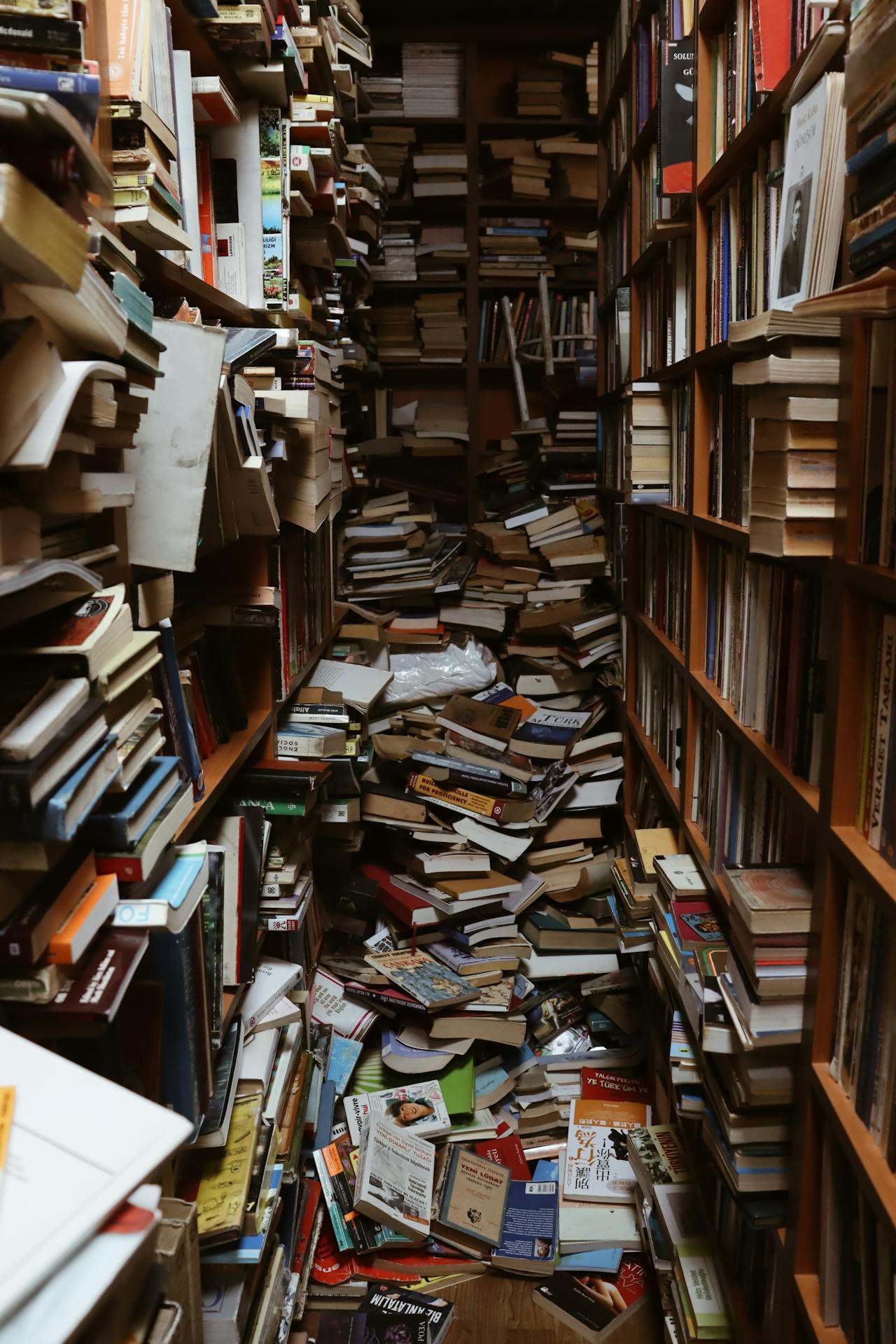
This library is limited to the space in your dorm room, or your off-campus apartment, but it is often separate from the library you curated in your bedroom at home.
For me, these libraries converged when I moved home after college graduation.
By no means were these my only libraries, by the way. I had collections of CDs, DVDs, and eventually Blu-Rays. To make space on the limited shelves I had, many of the physical media discs were put into binders to make room for books.
In the span of a few years after college, my grandfather moved into a condo. When we helped him downsize from his home, and again when he passed, I accumulated his books. The pattern repeated after the passing of my beloved Bubby. These additions to the library are sentimental, but even the sentimental items require space.
Then came my first apartment, which didn’t include every book in my library. I was lucky to keep a few boxes back in my parents garage. Finally, I bought a house and eventually all of my books – whether collected, purchased, attained, or permanently “borrowed” – were in one place. And I had room for them all. This one instance in time, when I finally unpacked, was the only time I had enough bookshelves to fit my books. In hindsight, that may have been the start of the problem.
Because what happens next is going to impact the number of books in my library up, while the space will remain the same. Next up, my parents decide to start downsizing, as a direct result of having been responsible for cleaning out the previous generations houses and condos.
In fairness, the houses and condos were lived in by people who survived the Great Depression and kept everything, as well as people who lived into the early capital commercial age of consumerism, which continues to this day. But back to the problem.
Since my parents were downsizing, their personal library was one place where they could save space. When this was happening I asked a very dangerous question.
What I should have asked was, “Are there any books I should take for my collection?” This would have been a great question to ask, but as I am just as much a reader as I am a collector, that’s not what I asked. Instead, I asked, “Are there any books I should read?”
This means that instead of getting only the books my parents, in their wisdom, thought I should hold on to, they were also setting aside any book I might be interested in that I didn’t have to hold on to. The difference in the former question to the latter definitely added more quantity to my library, because it’s not like I’m reading one book a day. These things take time.
Then my girlfriend, now wife, who is also a reader, moved in with her own personal library. It was smaller than mine, but it was also larger than the number of shelves she brought with her. Even after accounting for the immediate downsizing that comes with deciding which of the duplicate books to keep, our shared personal library grew.
As you can see, once the house was filled with books, it kept filling with books.
And while my parents downsized and were able to give me two medium sized bookshelves and two small bookshelves, they filled up rather quickly. A little too quickly.
A library doubling as a collection
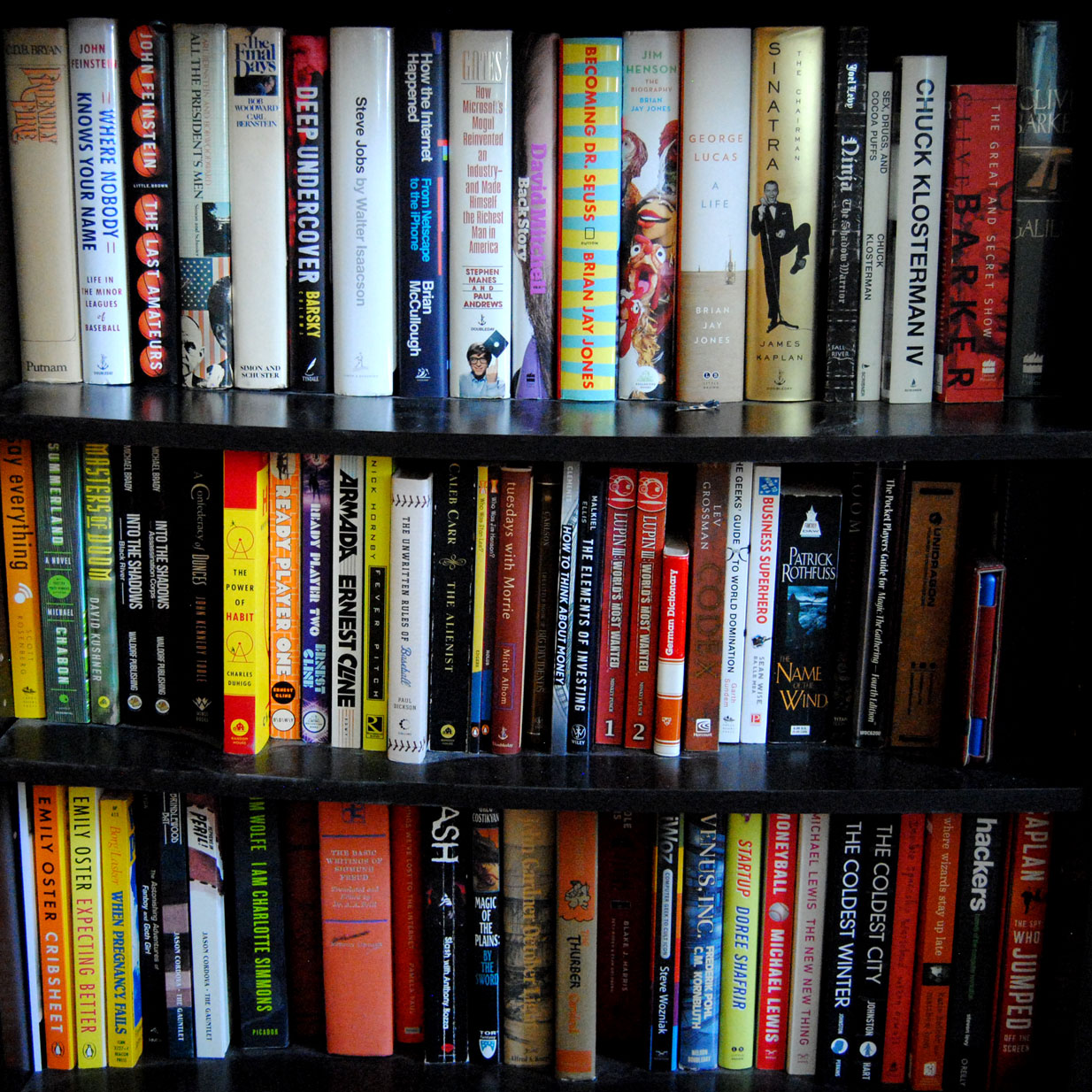
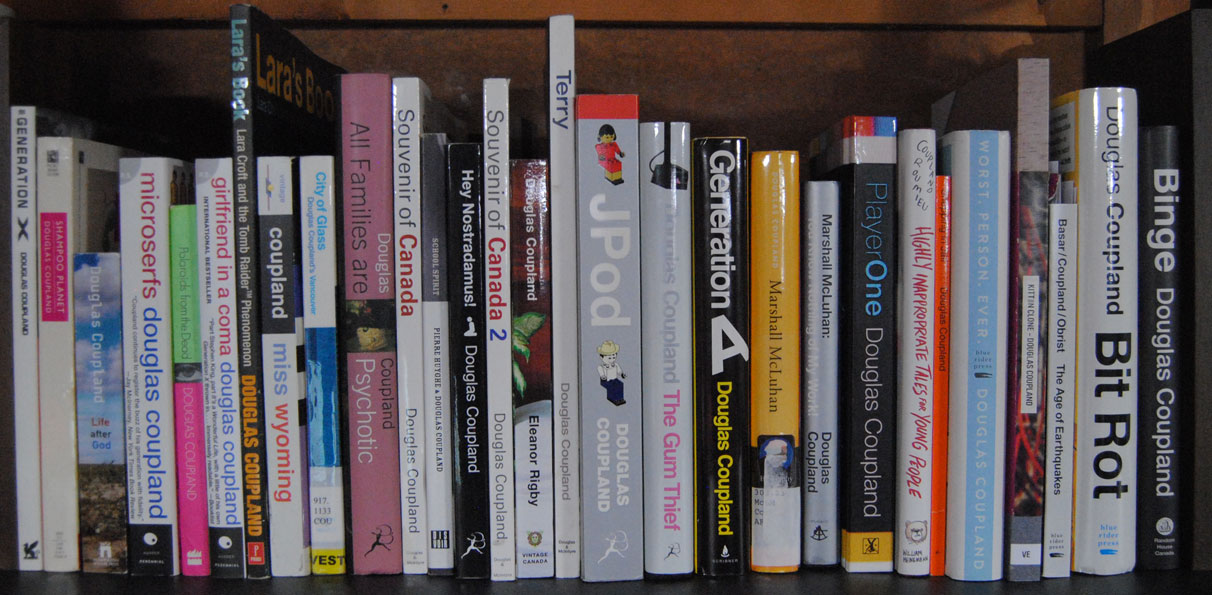
How did this happen? Well, aside from the books that I’ve discussed, I’m a fan of certain authors and a bit of a completionist. The authors I’ve been collecting happen to be fairly prolific. My Len Deighton collection is complete with more than 30 books, one of which is two versions of the same book. My Chuck Klosterman collection got changed from hardcover to paperback because I had an equal amount of each. I decided to pare down to paperback because he always adds something to his paperback editions. It doesn’t hurt that paperbacks save some shelf space. My Douglas Coupland collection is complete for now, but both he and Klosterman are still writing, so it shouldn’t be assumed that those are completely finished.
I also enjoy the works of Clive Barker and happened upon a cheap eBay lot of his hardcover books, many I didn’t previously own. That collection is mostly complete, but I am trying to obtain hardcover copies of all of Barker’s works, and there are some I have only in paperback and some missing titles overall.
Marc Maron, David Mitchell, and Michael Caine are also authors aside from their many notable professions and titles, and I own each of their books as well. By comparison to the previously mentioned authors, these are smaller collections, for now. They are always capable of writing more, so those collections aren’t safe from increasing either.
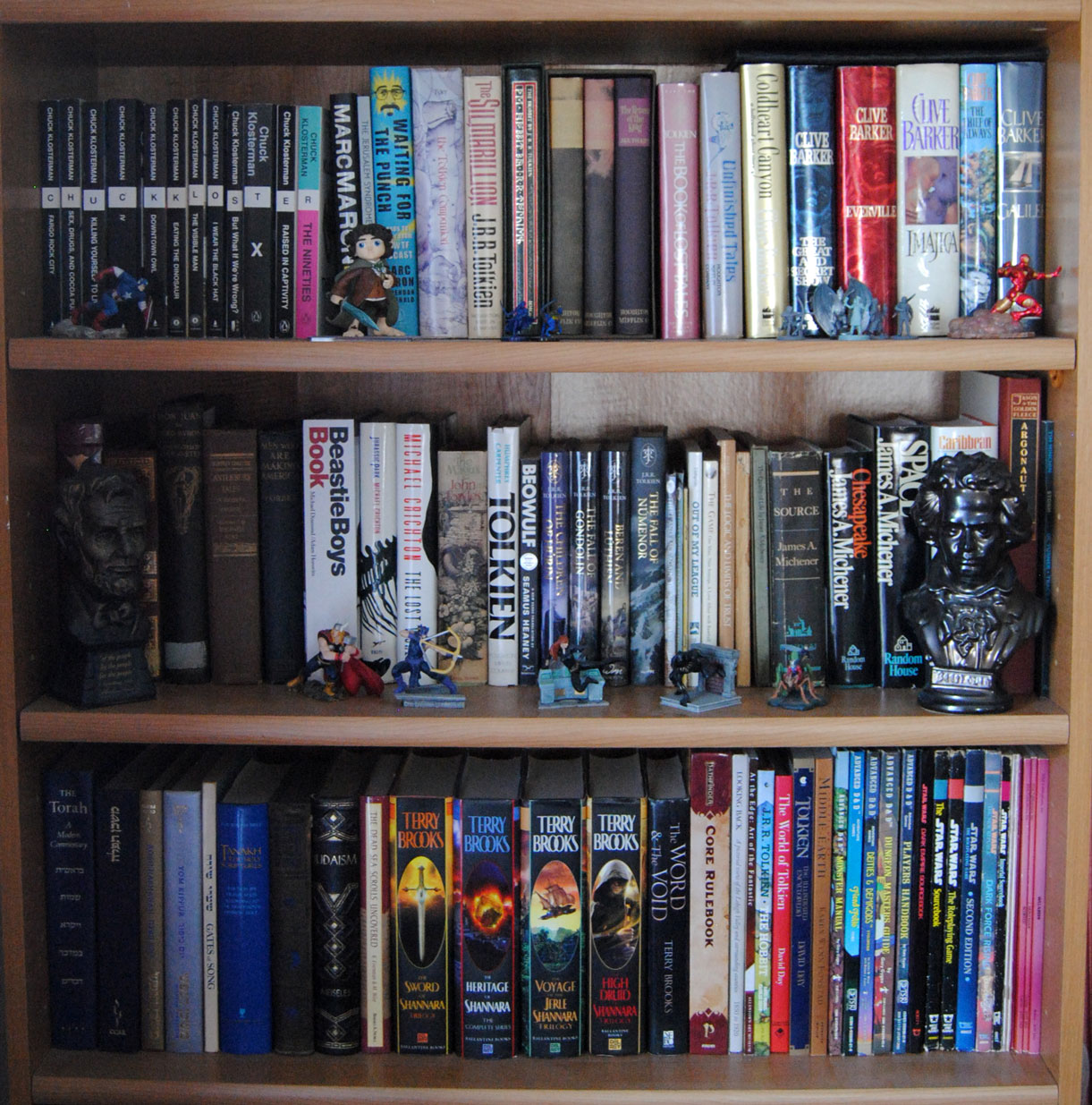
I also have most of the works of J.R.R. Tolkien, including the new stuff, although I may be one or two titles short. I’ve become a fan of Essa Hansen’s work, so I own her Graven Trilogy and the prequel novella, and I’m sure she’ll be adding more books to my shelf soon enough.
I’m very interested in Apollo-era NASA, so I own many autobiographies of those astronauts and other books of the era and topic. I’m a fan of the Baltimore Orioles and have at least three books either by or about Hall of Fame manager Earl Weaver, as well as many other books on baseball. Then there’s my interest in technology and its evolution and history, with many titles reviewed on this blog about that topic as well.
I also have a small James Michener collection, which if it becomes a focus, will require much more bookshelf space than is currently available.
Then there’s my Terry Brooks collection, plenty of music biographies and autobiographies, and more. I should probably also count my wife’s Jane Austen collection, our graphic novel collection, and all of the RPG books of Dungeons & Dragons, Pathfinder, and others that also take up room in the library that is my house.
All of that is probably just about half of my library, as the rest is filled in with books that are unique, or maybe handfuls here and there that don’t have enough of a section to be named in the aforementioned microcollections. It’s enough, and with time it became evident that it’s all perhaps more than enough.
The pages are the problem
Now, I am lucky. All of these books fit on all of my bookshelves. But I’m at a bit of an impasse, as I don’t have room for more without getting rid of some. I also have some books in some places where they ought not to be, but they fit for now.
Publishing is BIG business. Writers continue to write books about the topics I mentioned, and the authors I collect who are still writing will continue to be published. No matter how much I downsize, there will always be another book. Even if I go to the library and my friend’s library of borrowing more books than I buy, there are still collections I would want to complete. So space may always be a bit of a concern. Plus, I must admit that I like a “clean shelf.”
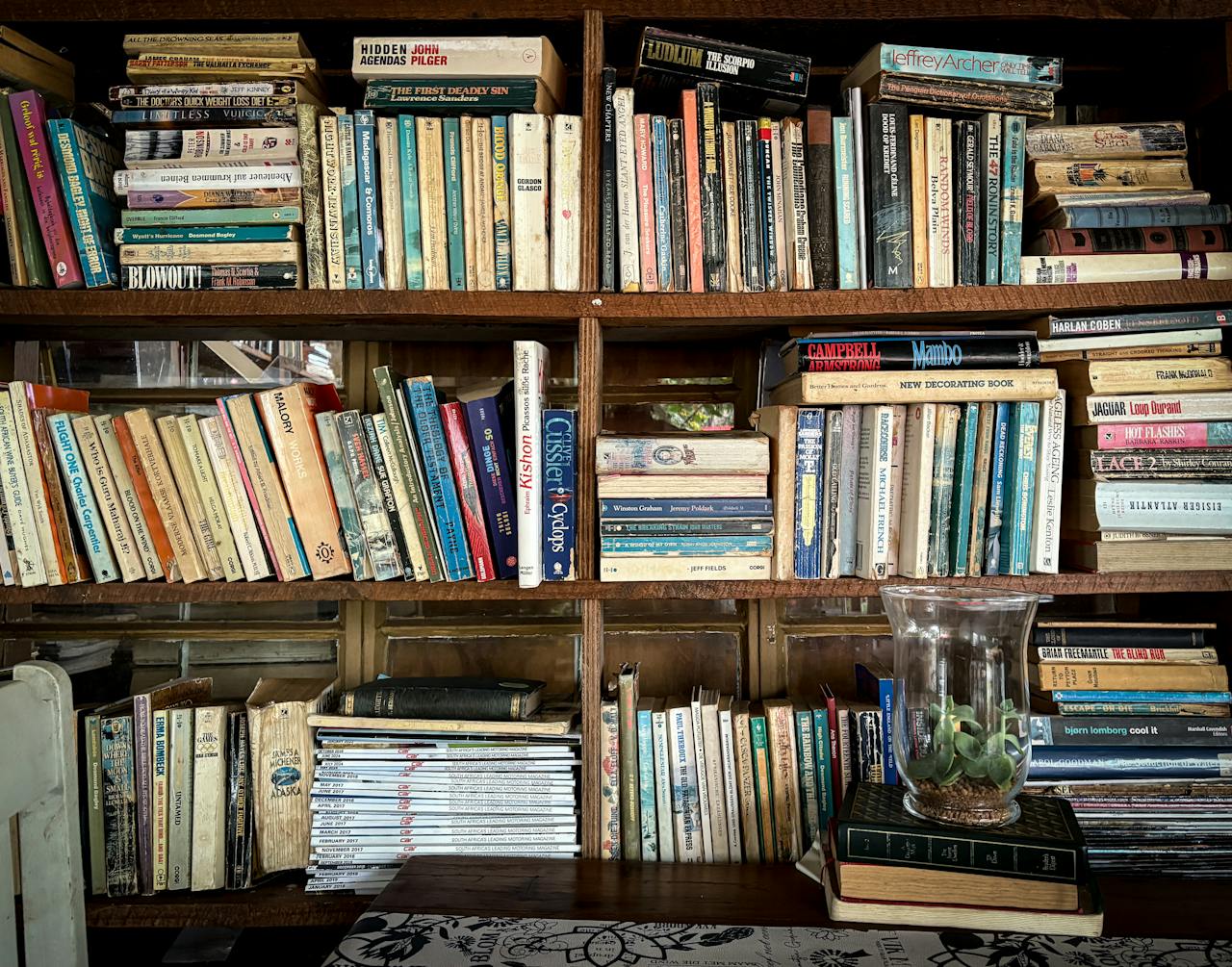
A clean shelf is something that, until I decided I wanted to downsize, was something I could only attain on occasion. As I define it, a clean shelf is a shelf where all of the books are standing upright with the spine exposed. No books on top of those books just because there is room. And a minimal, if any, number of tchotchkes on the shelf.
But at the height of my library, bookshelves were stuffed with books, and when there was room on top of those books on the shelf, books were laid down on top with as many as could fit. It was generally getting hard to find the stuff I was looking for.
Now, for extreme context, when I started this journey I was jobless, the pandemic was ramping up, and I had just come to the conclusion that I have too many books. The time had come to start figuring out how to pare down the library.
Like any good bookworm, I did my research.
I had too many books. It’s not a real problem given everything occurring in the universe, but it’s not ideal.
So, I turned to the internet to see what other people had to say, because clearly, I wasn’t the only person with too many books. As I’m just now writing about this, years after I started this research, some of this stuff is dated. Some of it just happens to be what I found interesting, and some of it is from a new search I did when going through this process of where I am now.
The first article that really spoke to me was from Lee Skallerup Bessette on The Chronicle of Higher Learning’s blog, a piece simply titled, “Getting Rid of Old Books.”
The jist of the 2017 piece is about how the library got out of hand. It includes some links to further theories about downsizing. Bessette’s ultimate solution appears to be getting rid of some of the literary collection and “the novels I haven’t read and never will,” and then listing the things that are definitely staying put, and, finally, going through anything else.
This is such a different approach than Robyn Devine’s guest post for becomingminimalist.com titled, “Breaking The Sentimental Attachment To Books” where she boasts being down to approximately 20 books from a time when “books were stacked everywhere in my home. My two huge book cases were double-stacked with volumes ranging from children’s fiction to college text books, and piles had formed next to couches and the bed, not to mention on any available surface.”
My takeaway from Devine’s conclusion is similar to Bessette’s feeling on Devine, who parenthesizes “the thought of only owning 20 books makes me break out in a cold sweat – WHAT IF I NEED THAT QUOTE?!?!?!”
But the process that Devine lays out is pretty solid: Write down your thoughts and connections to your books. Get ruthless with your “yet to read” pile. Share your books. Set aside one shelf of your book case as your “desert island” shelf. Organize your non-fiction books by topic (and pare down overlaps) – which I disagree with. And obviously, get rid of multiple copies, which I do agree with, but only to a point.
While this is a noble process, one that I’m not really likely to follow, it could be helpful for others. I heartily disagree with paring down topic overlaps. From my office desk where I’m typing this, over my right shoulder is a bookcase where there is an entire shelf of NASA astronaut autobiographies and biographies. Additionally, there are a few books about that famed Orioles manager, other baseball tomes, and more that reveal endless amounts of info about the topic when paired together. Who would dare limit themselves to owning just one book on NASA, one on Earl Weaver, and one on baseball itself?
The semantics are something I would, and do, take too seriously, and it’s not something I’d pare down anyway. While I am guilty of a few books that I have multiple copies of, they are my “desert island” books, and I have a second copy as paperback. Should I choose to travel, it’s easier to lug with me than the hardcover editions. I also have one or two signed books that I have for collecting, in addition to the unsigned copies for reading. But those signed books that I only have one copy of are my reading copies. I won’t be getting a duplicate in the future. It’s basically, what I have is what I have at this point.
That I read Devine’s article, and others in the name of research, is likely the only reason I would have ever encountered these thoughts and ideas. I have no interest in torching my collection down to 20 books, but it’s clearly an option for some. I don’t think, however, that I’ve ever met someone who would call a complete personal library of just 20 books suitable.
Next up is a very insightful piece by Molli Carlson for Clutter.com “How To Declutter Books – 8 Bookshelf Clearance Tips.”
I find some fault here. There are some great tips, like clearing the whole shelf, dusting and wiping it down, and putting everything back. The thought here is that by handling each book both to clear the shelf and put it back, you can reevaluate your relationship with that book twice. That’s great.
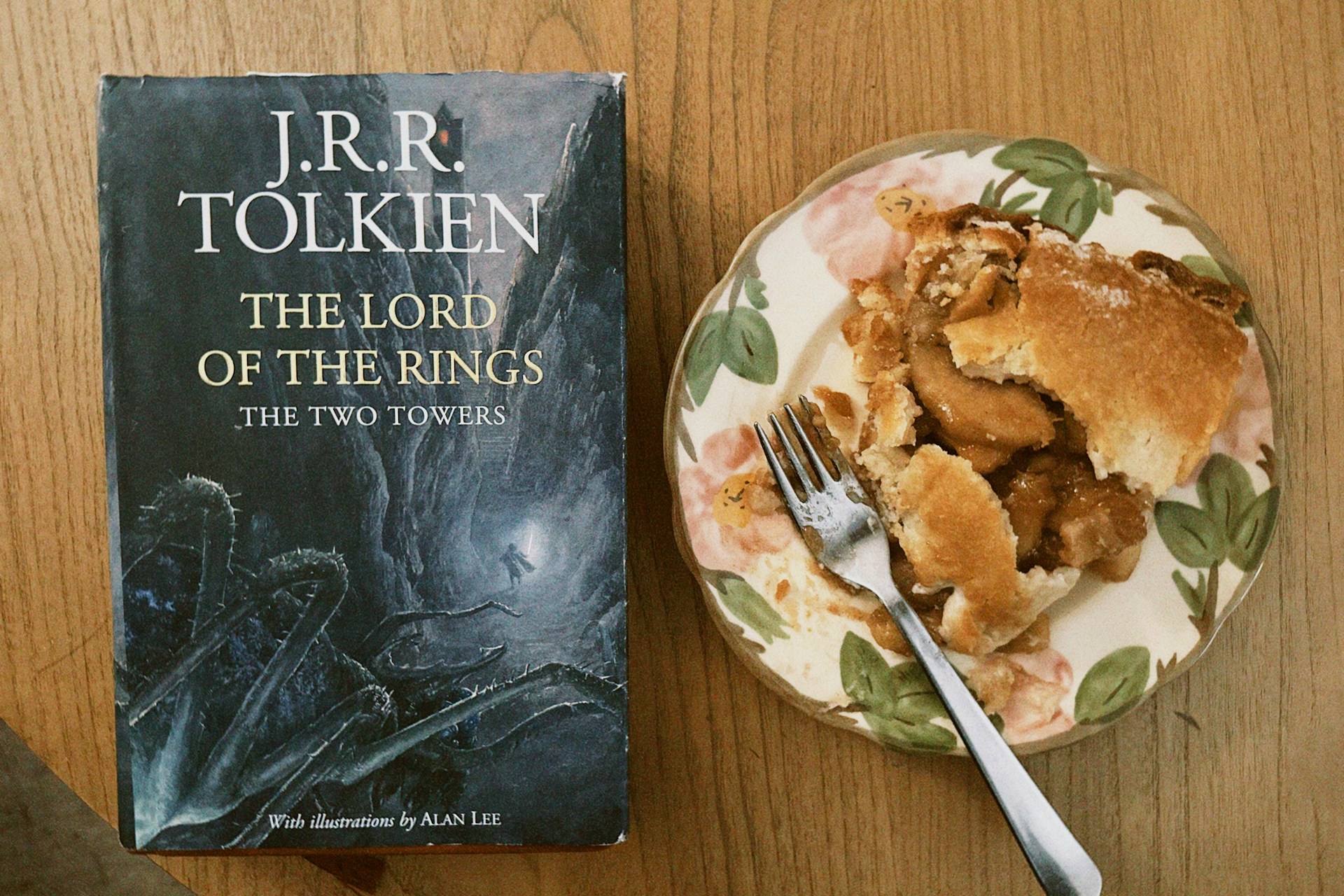
Then Molli writes, “Let go of any books in a series that you don’t read.” This seems invalid, because the explanation is about breaking up a collection or series because you enjoyed one portion of it more than the other. The example given is the Harry Potter series, which I have not read. I see it as akin to thinking that The Two Towers is boring, so I’ll just keep The Fellowship of the Ring and The Return of the King. Series, like trilogies, are meant to be enjoyed together. You don’t skip chapters that seem too slow do you? Or perhaps you do, in which case, how are you still following along? I’m sure this is boring to you, so skip ahead already!
Number four is a bit interesting to me. “Choose contemporary over classics.” I don’t have many classics. Those that I do – Divine Comedy, Don Quixote, Beowulf, and Canterbury Tales, for example – are classics I enjoy and want to have around or intend to read and would prefer my own copy. I don’t have any Shakespeare. He’s great, but I had to read it for school and never fully grasped it. (Maybe someday.) The few classics I own, I chose to own. But I can understand why, if people still have classics from their scholastic days, it may be time to part with the book that you liked enough to earn a B+ on a school report over a decade ago.
The next one I’m sure to make use of. “Give cookbooks whose recipes you’ve mastered away.” To this I’ll add, use it or lose it. I don’t have many cookbooks, but those I do have aren’t used much, so I may have to go through them. As it relates to the downsizing of a library, I keep my cookbooks in my kitchen. There aren’t many and it’s certainly not an overflowing selection, so I can get to those eventually.
Number seven is a rule that I viscerally hate. “Maximize Vertical Space.” “Stack books both horizontally and vertically to add variety.” I said it before, and I’ll say it again: I like a clean shelf. Don’t mix that stuff. I don’t care how “cool” you think it will look. It will always look messy to me.
That said, the article also includes some other tips and tricks to decision making. The idea of asking yourself, “Does this book bring value or serve a meaningful purpose?,” may be the stupidest thing I’ve ever read.

All books have value. Oh, I’ve read some bad ones, but even the bad ones have some value. It’s like learning from your mistakes. Sometimes these “tips” and “tricks” just serve to close off readers from perspectives that might challenge them, but they could be good for them to experience. Going back to Devine’s tip to “get ruthless with your ‘yet to read’ pile” is likely to have you remove the challenging reads. They’re much easier to discard than the comfortable books.
The best advice from the clutter.com article is “one in, one out.” I am not officially subscribed to this one yet, but I will be once I am done with my process.
Another Kondo attempt article is on lithub.com by Summer Brennan. In the article “On the Heartbreaking Difficulty of Getting Rid of Books” which is more or less critical of Kondo. Brennan does give Kondo credit, however, for “a very specific kind of book and book-owning habit: Tsundoku, an untranslatable Japanese word that means ‘buying books and letting them pile up unread.’”
This is something I’m actively remedying with my process, but I’m not done processing my old research.
The Lifehacker article “How to Prune Your Book Collection, According to Professional Book People,” is full of insight, but the most important thing in it is actually the advice to prune your collection regularly. The timeframe can be yours to choose, but maintaining the “one in, one out” rule with annual pruning is a good way to keep things in order. I expect that I will personally not prune all that often. The pruning advice is more about books you don’t or haven’t read, so you’re just assuming your time with them has come to an end and you won’t ever be getting to it.
As you’ll learn when I get there, that won’t be my case, but it could be helpful to you.
And of course, what internet research would be complete without a trip to Reddit.
The one-in, one-out method is here, but there’s also an honest amount of regret. One deleted user who spoke of the like-versus-love pile defined the like pile as “it can’t easily be found in the library or thrift shop if I want to read it again, I can’t find an ebook copy of it, there is sentimental value attached to that physical object.” I think these are all important reasons to keep a book. Though, since I only tolerate ebooks, that one is less important to me. Also, if I already bought the book once, I don’t want to have to buy it again.
Quite a few commenters discuss getting rid of books in the “to-read” pile if they’ve been there for five years or more. I’m not sure how I feel about that, which is more because I’m not sure how I feel about these designated to-read piles. Technically, any book you own you haven’t read could qualify for your to-read pile, right?
Are there books people have that they haven’t read, that they don’t at some point intend to read? Is there such a thing as books that you would keep in your library that haven’t been read, which you have no intention of reading? If so, I haven’t uncovered that yet.
There are people who use their physical space to limit their libraries, which makes sense. There are also those people who have their favorites, like I do, but those favorites, be they authors, topics, or series, are the only physical parts of their library, and everything else is digital. That must work for them.
Public libraries come up quite a bit, but I know that books get rotated through, so the idea of “I’ll get to it one day” isn’t reliable when it comes to your local public library.
Surprisingly, that Reddit post could be seen as generally helpful, which is not something you associate with Reddit all the time.
Marie Kondo-like methods do not spark joy in me
Everyone, especially the more journalistic articles or blogs seem to touch on or mention Marie Kondo, which I guess does nothing but date their respective posts, akin to writing about health and mentioning the Atkins diet. But perhaps it’s because of what became my approach, that I find Kondo’s 20 books ridiculous for readers. Utterly ridiculous. I think it’s the fact that she equates books with everything else that could be considered clutter that’s the problem. I don’t begrudge people for looking into the fad, but it’s not healthy, just like Atkins.
And let’s take a moment to look at Marie Kondo as a whole. She keeps coming up, so what does she have to say? Well, without actually reading her books or watching her Netflix series, I can only go on what others say. I have no interest, after all, in actually reading her books or watching her series, BUT, even as far back as some of these initial articles I found there is controversy regarding Kondo and books. A Stylist article titled “Marie Kondo addresses the ‘misconception’ about only keeping 30 books in your house” is something to look at.
First, this makes me wonder where some of the aforementioned bloggers and columnists got the number 20, but IF, and that’s a big if, I were Kondo, and there was some kind of misconception, the first thing I’d do is make it 30, but for me it’s all heresay. So what happened? Well, she addressed it on Jimmy Kimmel, where the article states:
“Kondo’s right to address the ‘misconception.’ First of all, she said ‘ideally keep fewer than 30 books’ so she was giving viewers a ballpark figure. Secondly, don’t focus on the number, focus on successfully reevaluating the way you measure your stuff. In short: is it just stuff or does it serve a purpose in your life (no matter how big or small). That’s REALLY what Kondo is asking you to do in 2019.”
Now there are a few glaring flaws with addressing the misconception this way. The first problem is that Kondo addressing it, and the article about her addressing it, end there. The people who would widely circulate this misconception on social media, leading to its virality and perhaps the reason so many articles I ran into covered it, is because virality isn’t about nuance.
By the same token, most people looking to declutter and downsize aren’t looking for nuance either. They are looking for a formula. If they could do it on their own they wouldn’t be seeking out Kondo or any other article. This is where we can go all Pirates of the Caribbean.
In the movie, Barbossa says “the code is more what you’d call ‘guidelines’ than actual rules.”
But the people who need help, and especially the loudest and most reductive people looking for help, are not looking for guidelines. They don’t want nuance. They want hard and fast rules. They want to know, “Should I keep this, or should I get rid of that?”
Discussing nuance on the internet or in media in general is something that is fairly lacking when it comes to media literacy. Kondo using the number 30 gives people a ballpark to shoot for. When that becomes too hard, blame needs to go somewhere, so Kondo gets it.
But before I let this one go, the article defends Kondo, saying, “In short: is it just stuff or does it serve a purpose in your life” which is fine if you are going through a junk drawer. When we are talking about books, it’s a generally stupid question to ask.
Have you read this? Will you read this? What does it mean to you? These are questions you can ask, but whether you like it or not, EVERY BOOK HAS PURPOSE. EVERY SINGLE ONE. And that’s always been my biggest problem when I read Kondo and her joy theories of decluttering. I’m sure they have value when we are talking about your Funko Pop! collection or how many mugs is too many, but books? To equate them with junk, even the trashy romance that are candy for some readers, diminishes their value.
In the end, you can surely ask yourself, “Does this book spark joy?” It may or it may not, but perhaps reading the book would educate one on its value. Or, perhaps you haven’t read since high school. If that’s the case, why did you bother to have books in your house in the first place?
That may be too harsh, but every book has value. The value of education isn’t always joy; sometimes, it’s learning. By reducing the decision down to a gut instinct reaction of yes or no, you devalue the book. And you will probably get rid of a lot of difficult books, especially fiction, that aren’t quite in your normal wheelhouse. But the thing with fiction is that its value often lies in understanding perspectives that are not our own.
This would make those books difficult or challenging to some people and instant get-rid-of books in the Kondo method for most. The bottom line here is that some declutterers are just removing potential learning from their life, and they are more comfortable in not wanting to learn and broaden their horizons.
But I digress.
Maybe a slow decluttering is best
The few academics whose articles I’ve mentioned, and those that I haven’t, make me realize how much worse this could be. I’m not sure how, but I know that it would be.
I’ve been gradually downsizing elsewhere in my home. My method of eliminating five items a day was going strong for over five years.
That philosophy was something I was doing up until I hit the point where most of the junk was gone. The rest could still be gone through, but I had reason to work through some minimalism, though I never claimed or wanted to go full minimalist. I started because I didn’t want my then-girlfriend to be put out when she moved across the country to live with me and I didn’t have any space for her. But there was also the knowledge that my parents had started downsizing and the lessons learned from clearing out my grandparents houses and homes.
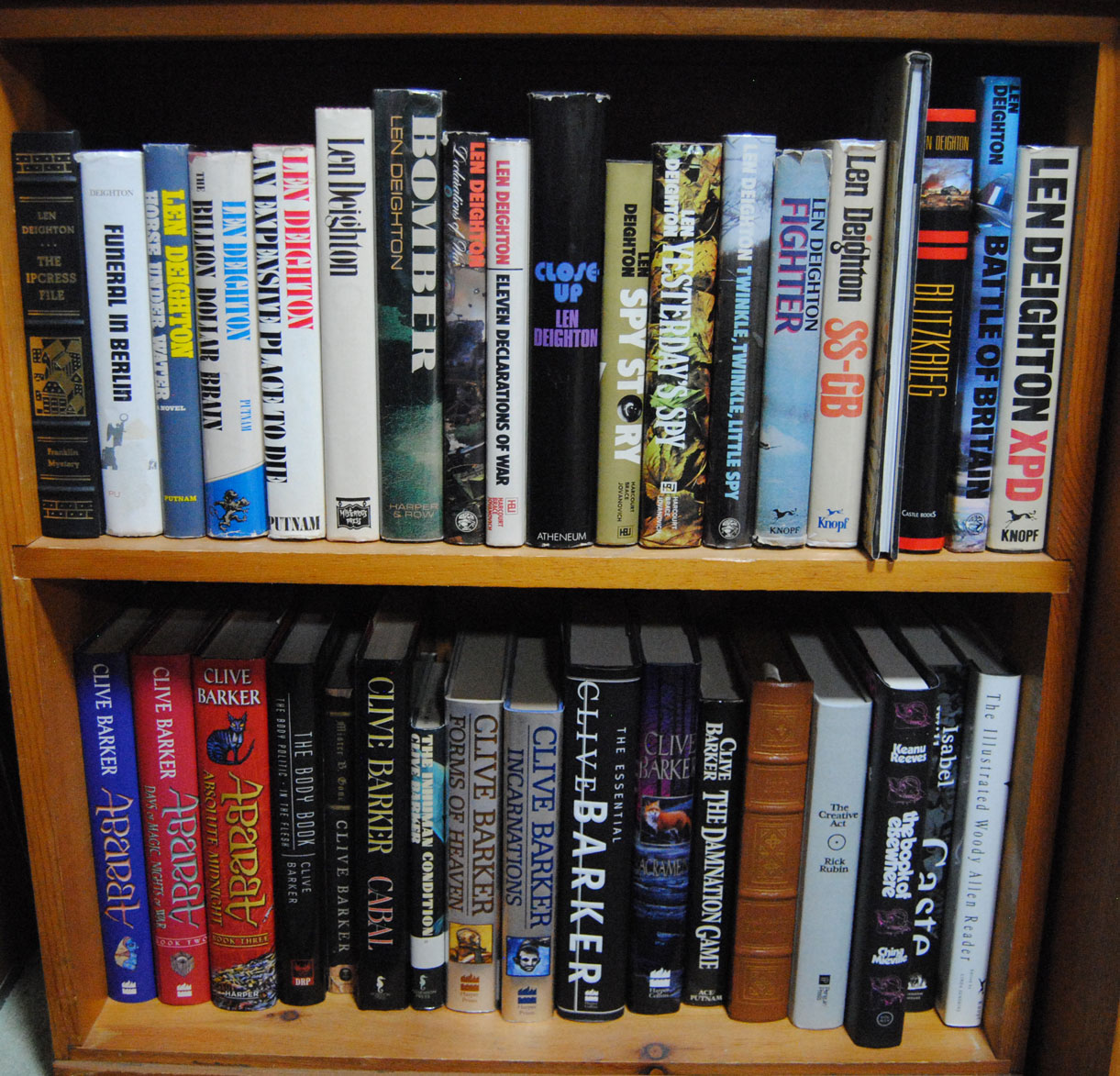
But books were always separate; my library was an entity unto itself.
So with that in mind, my research now laid bare before you and my comments established on what others have done, both good and bad, what have I been doing?
Reading all of the books in my house!
We have books at home
Now, this is contrary to many of the tips and tricks set forth by many of the articles I’ve mentioned, but here’s why my book purge started with reading.
I challenge myself by reading things I might not normally read. I learn because I’m reading a lot more and generally more from outside my comfort zone. I also save money because I am reading what I already own. For better or worse, mainly better, I am going to read it all.
As a reader, I’m a curious person. The books I collected along the way that I haven’t read YET still hold some interest to me, and I need to discover why they may have caught my eye in the first place. Even more intriguing are the ones that I inherited from parents or grandparents. Why did they pass this along? Why did THEY have this book in the first place? The same is true of books gifted from friends: why did they think I’d like this?
Some of these books would be disregarded if I used the so-called five-year rule on my to-read pile. But at this point, they’ve already been moved up to three times. I put in the time to pack, move, and unpack them at least once, so I might as well let that time and sweat equity amount to something and see what I have.
I save money because, while I do still pick up a new book on occasion, it’s much easier to pass on a book knowing that I have plenty to read at home. I’ve set a goal, and while it will take some time to get there, I don’t want to make it any harder.
There are gifts from my wife, my parents, my friends, and the occasional advanced reader copy (ARC) I’ve received when blogging about new titles. I do make attempts to maintain as close to a one-in, one-out methodology as I can, even with regard to those additions.
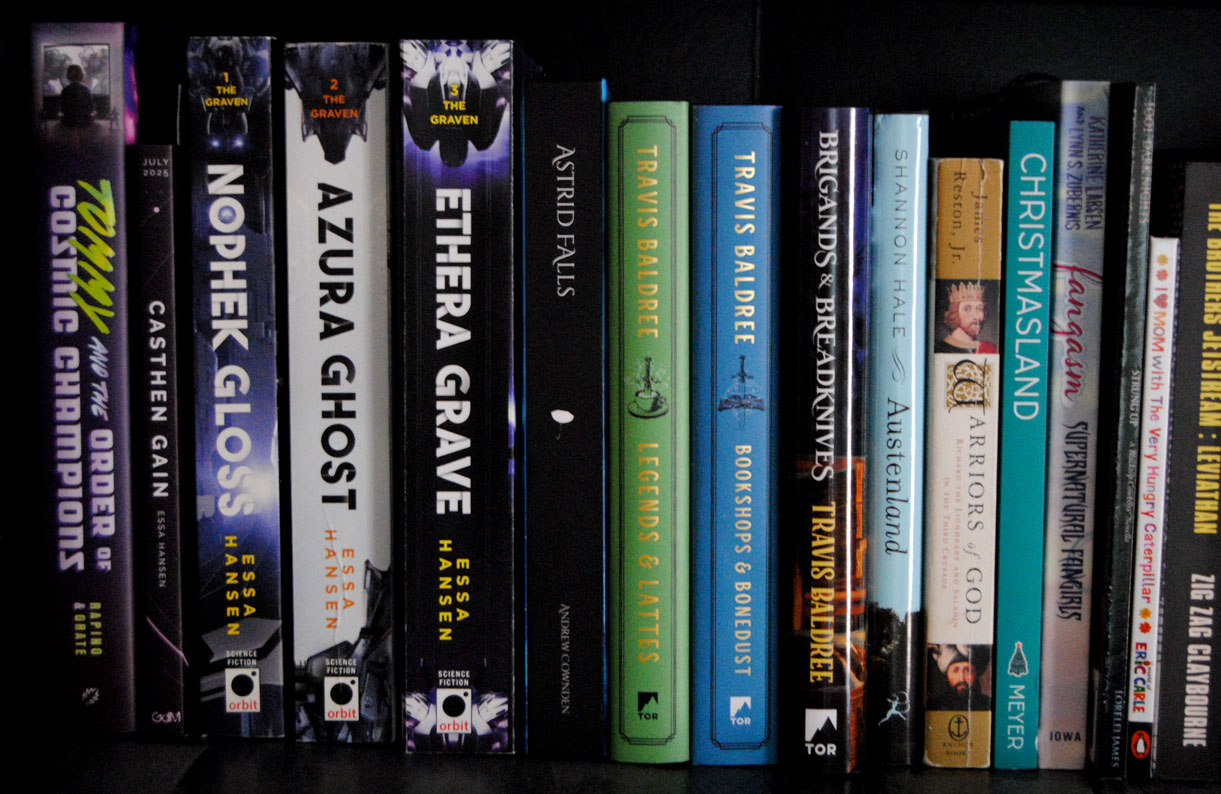
Despite my ongoing efforts to downsize by reading all the books, I’m never going to turn one down. For my author friends and those wonderful people I’ve met in the publishing world, I will get physical copies of your books to support you. I have been able, over the course of every ten books I read, to make room in the house on shelves for new books that I sometimes get ARC versions of, or that are gifts. Once people know you are a reader, books will appear with regularity.
This also doesn’t preclude you from rereading something. I’m still rereading stuff, but for me it’s to satisfy the completionist in me. I have holes in some of my author bibliographies on the blog for folks I started reading even before the blog began. But if you want to reread something, you don’t need a reason. Just know that it does put another book in front of all the rest.
And I have to say, while reading that many books may seem daunting, and it’s not nearly as gratifying as a good, instant, three-hour purge of shallow, gut instinct decisions to get rid of books could be, but it has been very fulfilling.
From get-back-on-my-shelf to get-out-of-my-house
Have I liked a lot of what I have read? Absolutely. Have I loved some things that I thought I would just be reading and donating, only to finish the last page and decide that this needs to stay a part of my library? Yeah, I have done that on more than a few occasions.
Have I read some books that I didn’t enjoy? Yes. In fact, most of the self-help and a lot of the business-oriented books I’ve read, many gleaned through old employment giveaways or such, have been slogs to get through. But I still make attempts to review them, for better or worse, since I put in the time to read them.
They are published works, so they still have some arguable value. It may be more valuable to someone else, or it may have been shallow or something I didn’t connect with. While I could easily argue a couple should never have been written, I can see how others might enjoy or connect with them…
I didn’t like Chasing Black Unicorns. I especially didn’t connect with Sexy Little Numbers. And perhaps there’s those two books I really and truly hated reading, such as Laptop Millionaire and The Geeks Shall Inherit the Earth.
But in these cases, it felt like I should put out a warning to people who may happen upon my reviews first, to dissuade them from these titles.

For each of those four books, there are countless more that I enjoyed and at least one I loved, books like A Confederacy of Dunces or October Light or The Human Comedy or Dragon’s Milk.
Of those four I really enjoyed, three were given or gifted to me, and the last one I moved around from place to place and don’t remember if I read it when I was in its targeted youth demographic.
And those books don’t include the collected works of authors, many of whom write more than one kind of book, whose entire bibliographies were fun to collect but even more fun to read.
It’s been a journey, one that the blog more or less has documented for the last decade or so. And there are plenty of books mentioned on the site that aren’t in my library anymore. I read them, reviewed them, and donated them or passed them on to a friend.
That’s been the process. But for me, the hardest part is always deciding what is next. So I spend the time going through and deciding what is next, usually in batches of 20 or more. This is more or less easy to do, because I set time aside to do it. I make every attempt to alternate between fiction and non-fiction, and while I love reading through Douglas Coupland’s bibliography, at the time of drafting this I still have two more titles to go. I’m not even halfway through Clive Barker’s bibliography yet, and there’s even more from Terry Brooks. I tend to lean towards one-off books that aren’t in those collections.
I do not see the logic or value of breaking up those collections, so the one-off books are more likely to be donated if I don’t like it enough.
Mood plays a large role in how I decide the next immediate book on the to-read list. I am also aware that given the process I’ve set forth for myself, skipping a potentially harder read does nothing but kick it down the road for, well, myself. So I do choose at least one or two books that might be challenging in each grouping. “Challenging” varies in definition for me. It could be a new author or a reaction to the subject matter.
An example being Chesapeake by James Michener. I hadn’t read Michener in a long time. While I loved The Source, I know it took me a while to read because it took half the book to get used to his style. In the end, it wasn’t that hard of a read, just a long and entertaining one. But this time it didn’t take as long to get back into the rhythm of his style.
Meanwhile, I have been kicking most of my religion or religion-adjacent books down the road. I will start incorporating them soon because I’m sure some of them will actually be harder to read than others. But I don’t plan on skipping them just because it may be harder to read them or because they might seem like a crash course in philosophy or belief.
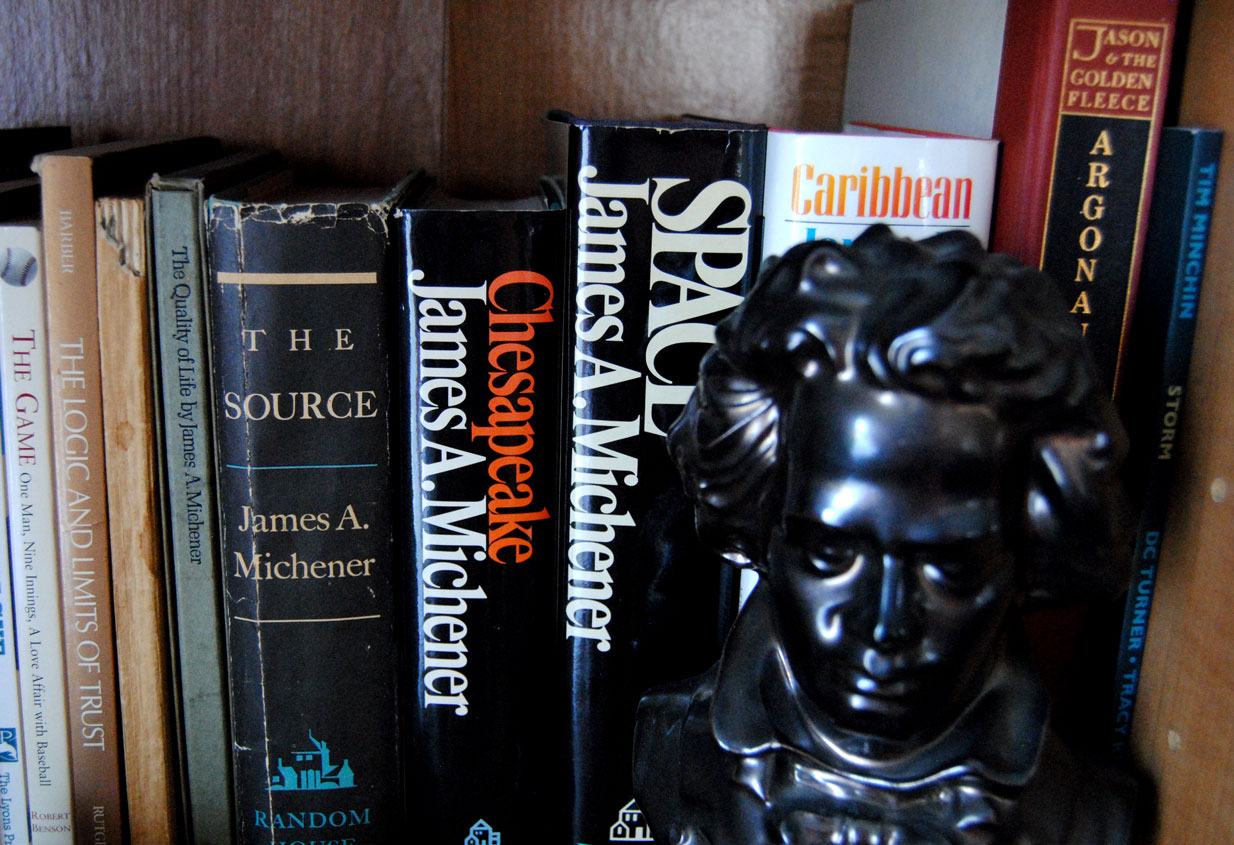
You’ll notice, if you’ve seen the blog at any point, that most of the book reviews are accompanied by a photo that I usually take.
And here’s the thing. I do photo shoots for book selections when I choose what’s next.
It is during my decision making and the photoshoots that I give precedence to the non-collection books. So, I haven’t cracked Terry Brooks’ Word and Void trilogy because I’m sure I’ll like it and so it won’t give me much room. Neither will the Coupland’s or Klosterman’s or the Deightons I’ve already been through. But I do read them, because I enjoy reading them, I enjoy writing about them, and we shouldn’t skip all the good stuff!
And I the further I go, the harder the decision making process on what is next becomes. I can point to certain bookshelves in my house where I have moved around my library in a way that that one shelf of a bookshelf is for books I’ve read and chose to keep. Another bookshelf might have two shelves filled with books I’ve read through. So I am getting there. It is getting harder and harder to alternate between fiction and non-fiction, as apparently, my collection is more non-fiction than I thought. But that’s fine, I can deal with that.
Better out than in
That’s really what it’s been like. I would say that by more or less randomly selecting books from the various bookshelves in my house and taking an afternoon to choose them, I stand a fairly decent chance at donating a few from those picked during each selection. The number donated goes down significantly if I’m reading from my author collections as opposed to the one-offs, but I know that, and I sprinkle in from my author collections in moderation.
We don’t have an infinite time on earth and, yes, for one individual there are billions of books out there, but there is only a finite amount of space in my house for books. As long as more go out the door than come in and as long as I read books faster than they enter my library, no matter how they enter, whether passed down or received as a gift or as part of a review, then I am making progress.
Again, it’s not that instant gratification purge, but it is a gradual purge that has me getting rid of more books than not. It has been a net negative insofar as the library is concerned. Perhaps more like one-in, two-out, which is great.
Because I said yes when people offered books to me for years, and because I would pick up books from yard sales and book sales where $5 often means you have purchased at least four books, I’ve got many more books to read.
But it has truly been fun. While I admit this isn’t the process for everyone, and especially not anyone in a hurry, it is probably the most thorough and thoroughly entertaining process for curious people who happen to be readers. Even the non-voracious folks with full-time jobs, other hobbies, kids, or any other excuse can take the time to read methodically.
Reading has become more of my go-to thing to do rather than doomscrolling. This may be why I read more than most of the people around me. Come to think of it, it may also be why I’m not as downtrodden as them.
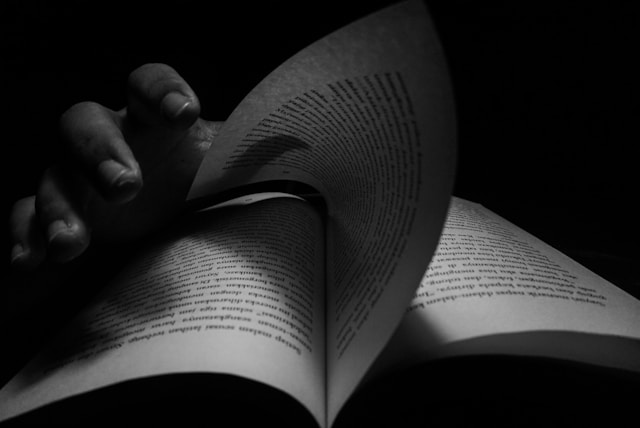
I also make a habit of reading a little every night before bed. Even if I’m so tired it’s only a page or two, that doesn’t matter. It keeps the habit of it. Making the time and actually reading before bed is what returned me to my reading roots.
I was a reader, and I am a reader, but I wasn’t always a reader in between. It got away from me. If I can get back into it, so can you, if you choose to.
What I’ve also learned is that I can read anything. Any topic, any story, anything with good writing or a good story – unfortunately those aren’t always synonymous – but they can both be equally enchanting and together absolutely enthralling.
I wouldn’t want to guess, but for the sake of transparency, I’d estimate that I’m a little over halfway through reading it all. Some of that is due to the nature of the one-in, two-out that’s happening, so even when I do make shelf space it’s usually filled soon enough. There are still some heavy books, in both length and subject matter, that I have put off. When that’s all that remains, or when I’m up for the challenge, those will be in the next batch selected or the one batch after that. I’m sprinkling them in more often now.
And I have to keep going because I feel like I may need the room. Len Deighton was a prolific writer. Coupland and Barker were anything but slouches, and Klosterman just announced a new book. But since I collect only his paperbacks, I have some time before I have to make more shelf space.
I also feel that I may be slipping into a Michener binge. I have a few unread volumes of his on my shelf already, but I could easily slip into wanting more. That’s quite a large undertaking, and it also would necessitate more shelf space. To keep with my minimum one-in, one-out rule, I’ll have some work to do before I can do that.
An epilogue for the writers still reading
If you happen to be one of those readers who also writes (it’s more of a correlation in my experience than a causation) then I have some additional tips that contradict many articles for a specific kind of book.
Keep the reference material. They’re especially important when you need them. Physical dictionaries and other reference materials don’t have poor internet connections and still work when the power is out.
I have two dictionaries, one a single-volume Websters and the other a two-volume Funk & Wagnalls. I’ve also got a Synonym Finder, a Quotations Finder, and lastly a pocket thesaurus which is admittedly the least used.
The articles and most of the internet research tell you that these are redundant to the web. You can easily look up any quote, or definition, or synonym, or antonym on the internet. This is true. But as a writer, writing on the internet can be a huge distraction, and a simple look into a definition or search for a synonym can derail the momentum of a draft.
That kind of stuff happens much less often when you use the offline resources.

Textbooks are different. I personally held on to most of my textbooks for way too long. Most were ones that were in my field or at least my favorite minors of feature writing and journalism, but I also kept some books in my major that tracked general communications theory. They all make sense if I keep myself within that career path. I should probably reference them more than I do, but that’s a horse of a different color.
I did, a few years ago, finally get rid of the science text books. I think I just got so used to them being on the shelf together that it was like they all belonged together. But those were books I was never going to open again. If I had kept any math books, those would have also been easy targets to gain some shelf space.
Sometimes with this stuff you can get lucky. In this case, it’s that I held on to my journalism textbooks from “the before times” if you will. This is old school journalism. It’s the way it used to be. This is the same journalism that Woodward and Bernstein used to report Watergate. I do think it mentions the internet, but this isn’t clickbait journalism. That’s something I hope they don’t actually teach in school. However, it is something I’m painfully aware of is the actual state of current journalism on the internet as newspapers more typically fade away.
That’s why I’m thankful I still have those text books. Would I go out and get a copy of it now had I not kept the ones I have? No. But since they’re here, and relevant to a style of ethical journalism so removed from buzzwordy clickbait, I’m proud to have the reference as a beacon for what journalism should be, even if I’m in a shrinking minority.
If you’re asking, you already know the answer
So we’ve covered everything I can think to cover.
I was able to do this because I was an avid reader and I regained my joy of it. Couple that with the feeling that I needed to purge the ever-growing book collection, and this ended up being a way to accomplish more than a few tasks. Plus, I’ve read interesting things, got out of my reading comfort zone, downsized my library, and saved money.
This may not be the way for you to downsize. Before embarking on such a manual and long purge, you must ask yourself if you are or want to become a reader. Having too many books to read or to store or to house is one thing, but if you’re not going to read them, there are other questions to ask.
It all starts with one question, “Do I have too many books?”
The answer is irrelevant. If you are asking the question, the answer is yes. Someone with a handful of books isn’t asking that question.
Perhaps one of the things I didn’t cover would be the answer for you. Perhaps you are someone who enjoys the digital experience. If so, the advice I would have is to at least catalog your current physical books and keep the ones that don’t have digital copies.
That’s the flaw in the “going digital” ecosystem with any medium, not just books. Sometimes that one physical copy is all you get. Discard it at your discretion.
If you’ve already asked yourself the question, you know you should start downsizing a bit, even if it’s not as large of a purge.
What can you do? What advice can I still offer?
Well, first things first. If you aren’t sure you want to read every book in your house, no one is holding you to that. There is no shame in making an attempt. You’ll know after a while if reading everything in your house is right for you or not.
The most important thing to remember when downsizing a book collection, no matter how you choose to do it, is availability. Libraries are great resources but they are not the best place to rely on for a book you might want to pick up every now and again. They do cycle through their inventory.
Additionally, be wary of going completely digital. Even that $0.99 ebook of something you enjoy isn’t guaranteed to be yours. Unless you have a PDF version, anything you don’t physically own or digitally have on your own hard drive could potentially be gone as easily as a cloud crash or a system retiring.
All of this is a preface to say that getting ahold of what you donate, sell, or give away can get pricey and harder based on the age or rarity of the book in question.
I’m still not sure why I ultimately decided to do this. Why, of all the options, was reading all of the books – the one thing, by the way, that most advice out there tells you not to do – the thing I actually chose to do?
Was it to save money? Not really, that’s just a nice side benefit.
Was it to be able to answer the question, “What is that about?” when someone points to any book in my house? That wasn’t a reason when I started, but I started before I became a father and now I would like to be able to answer that for my kid.
I don’t really know what the full impetus was.
Instead of dwelling on what I can’t tell you, let’s focus on what I can.
I have surprised myself with just how open I am to books that I didn’t pick up for myself. That’s a great thing. Knowing that I can read just about anything is a skill that most people remove from their skill tree after their respective education and required reading ends. I now know, no matter what it is, I can read it. I also know I don’t have to like it to read it.
I can also say that “Don’t judge a book by its cover” is also true of my expectation on what I may or may not keep. I don’t know if it’s good or bad that I’ve encountered some books I thought I’d be donating that are back in my permanent collection, but that’s how it ended up.
I am also starting to see the benefits of my reading labors on my shelves. The book shelves are starting to become uncluttered. When I do get books from friends or family or authors, I actually have room for them. If nothing else, it took quite a while to get here, but it’s great to be here nonetheless.
Before I started this, I had already turned myself back into a regular reader. In fact, I had become such a reader that my editor, Chris, who somehow made it through this entire post, told me that this site would turn into a book review blog if I didn’t heed his advice on how to organize my blog schedule.
This journey has turned the notch up to “avid reader.” Personally, I am enjoying this slow process. I believe that I don’t have to get to the end for it to be as fulfilling as an immediate purge might feel. In fact, with around half of my own library still to go, I can easily state that I’m as fulfilled with this process and happy with my decision to undertake it as I ever was.
Perhaps, the further I go the happier I am that I choose to read it all. Results may vary, but I would say that if you make an attempt, you may just get hooked and feel as fulfilled as I do.
As with many things, choosing to read all the books in your house is probably more about the journey and less about the end goal. With new books populating shelf space vacated by those that don’t need to stay with you, it’s an ongoing journey that, if undertaken, you must enjoy. Because with the end goal moving, the amount of books is not static, the journey really is everything.
So is it for everyone? No. Is it for you? Only you can decide. If it isn’t for you, there’s plenty of people out there and articles and websites that will help you purge more quickly, but I don’t think it’ll be as thorough and I know it won’t be as fulfilling.
So what are you reading next?