
I’ve been reading about Stranger in a Strange Land for a few years now. I don’t mean I’ve been reading in-depth breakdowns or anything, but the novel has been referenced on more than a few occasions throughout the last few years in books or other media I’ve been consuming.
As luck would have it, I had a copy in my house. Each time it was referenced, I moved it up the reading list until it was time to tackle the book.
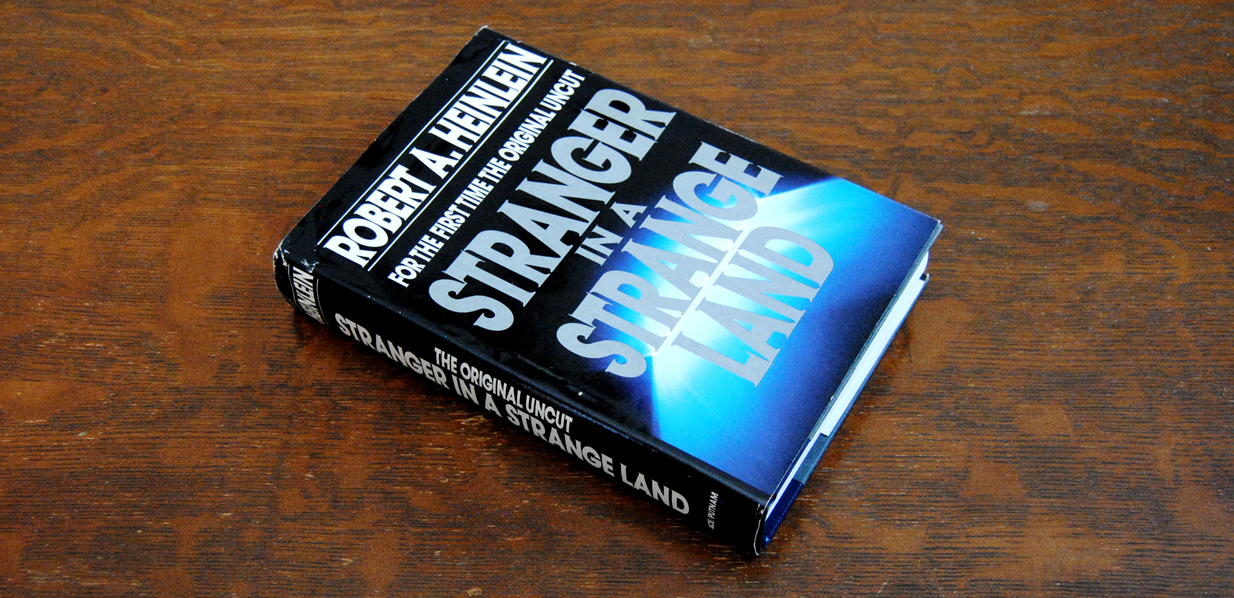
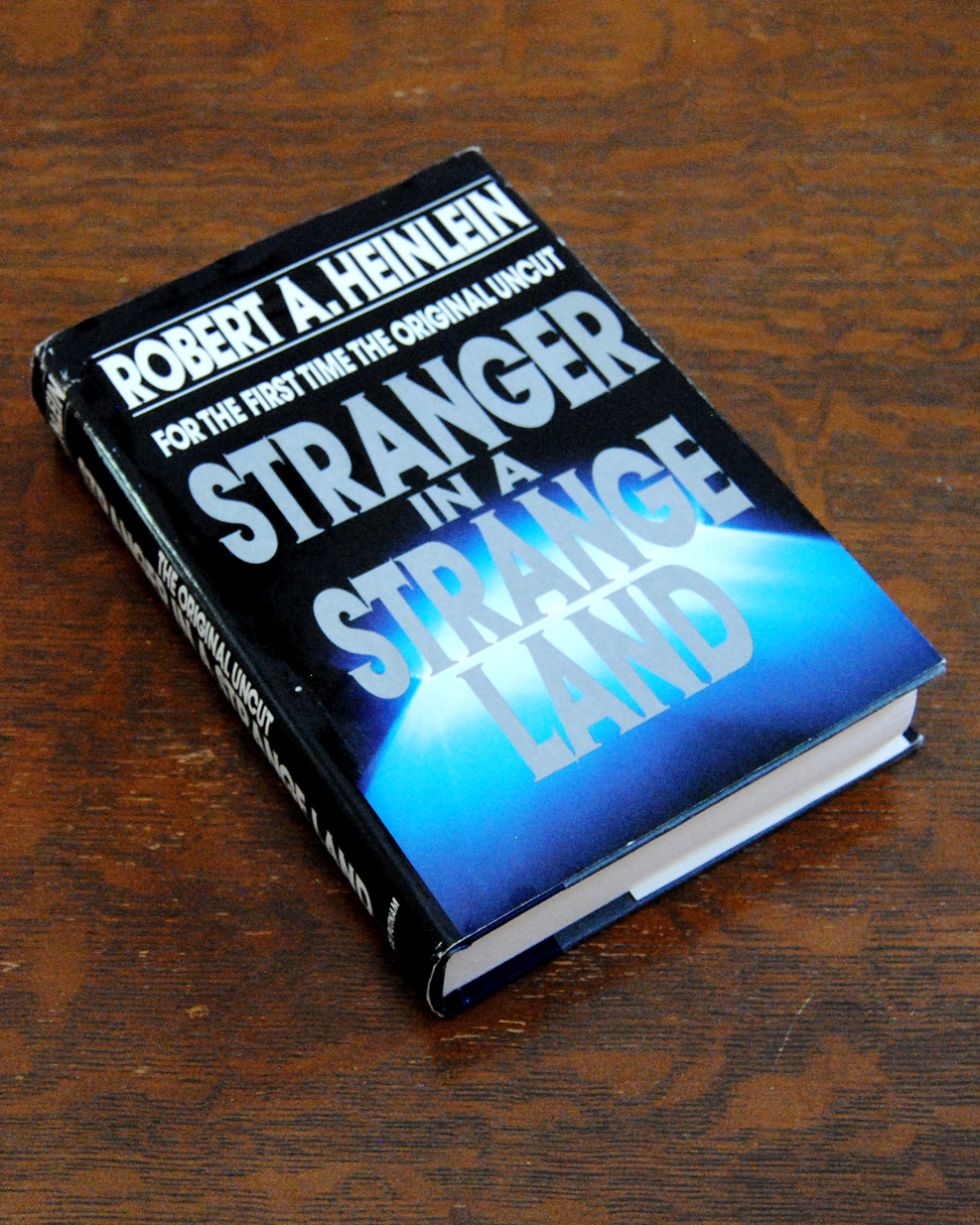
But I don’t have the initial edition, I have the “original uncut” edition of Stranger in a Strange Land. This version has the preface written by author Robert A. Heinlein’s wife Virginia that discusses the word count of the original edition of the book at around 160,000. The “original uncut” edition, by comparison, runs around 220,000.
Having only done some cursory research since finishing my read through, I can’t tell you where those 60,000 additional words were cut from the original. It seems to lag in the middle when the characters are all relaxing in the Poconos, but that could be either my experience or this particular edition of the book. I wouldn’t know, and I didn’t see it described as anything more than a more fleshing out of ideas and discussions overall. I would guess there may be sections new for someone familiar with the first printing, but if this is the edition you pick up, you won’t be any the wiser.
The inside cover describes the book as “the epic saga of an earthling, born and educated on Mars, who arrived on our planet with superhuman powers and a total ignorance of the mores of man.”
It also describes the book as “a novel that not only would become the bible of the ‘love generation’ but also would transcend the science fiction genres to achieve the status of modern classic–and sell millions of copies.”
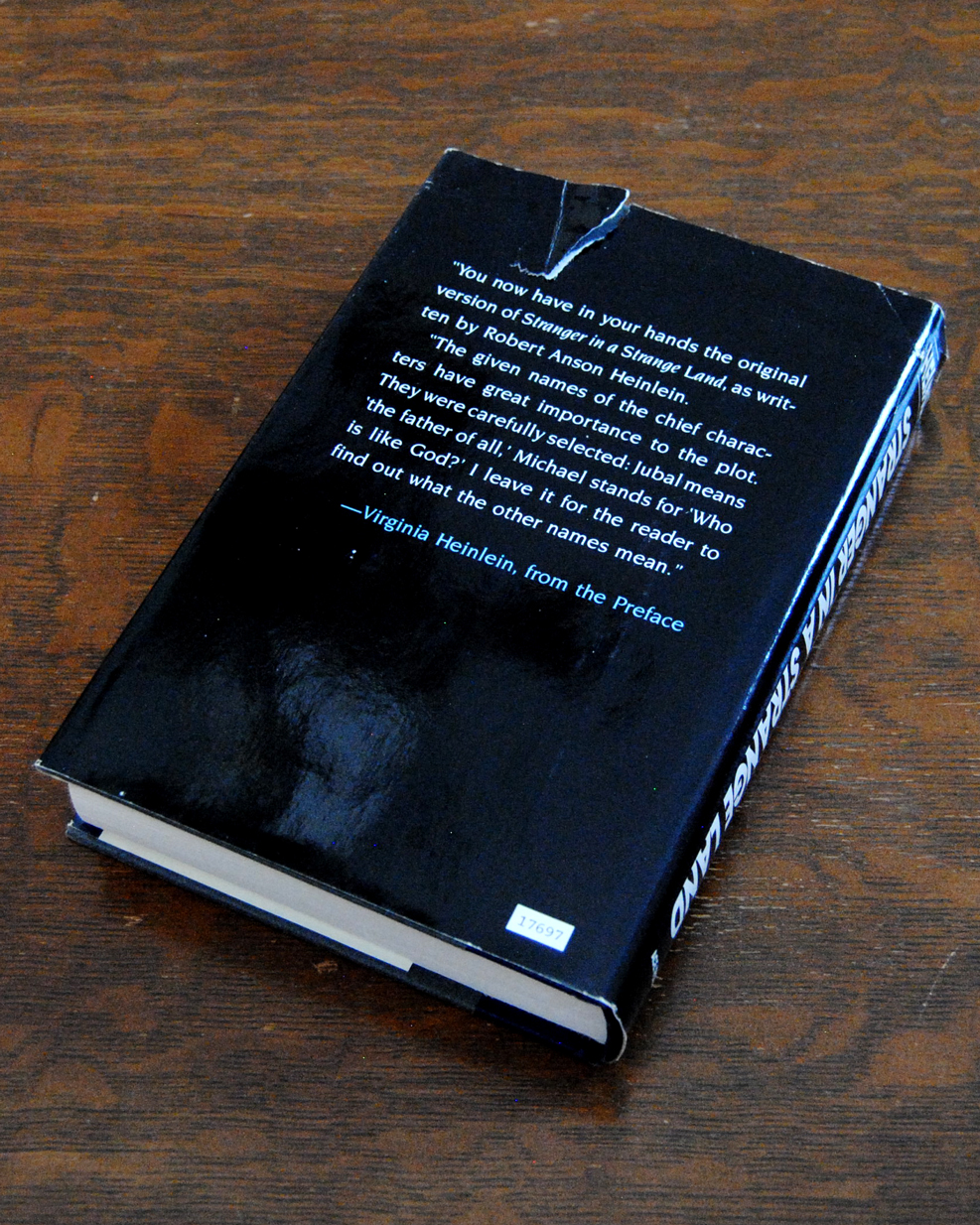
All of that seems important to set up. I know I’ve read old books before, but this one felt a little more modern. It’s not set in a specific future, just the future. And for all Heinlein foresaw in his science fiction, he really hit much more than he missed. This book was originally published in 1961, with the “original uncut” version following in 1991. Decades removed, the book strangely doesn’t feel dated in the slightest.
How many things can we say that about? Truthfully, I’m not sure we can say that about many things from 1991 at all, much less 1961. Yet here this book stands in defiance of time.
I don’t know what reception this book got when it was first published. I can’t imagine being the “bible of the love generation” was instantaneously true. Though I would guess it truly was hit-or-miss along generational lines.
Towards the end, its ideas of utopia strike me as much more anti-capitalist than pro-communism, which is a nice change to the usual black and white. Of course, it ends up containing more free love ideology than I was expecting. For being originally published in 1961, I can’t say I blame Heinlein.
I did find the book a little slow nearing the middle third of the book, but the end really moves. There’s about as much philosophy and anthropology discussed throughout. Human behavior, standards, and mores are under a microscope in this book. But we’re unlikely to see a book like this anytime again soon.
Decades after its initial publishing and the publishing of this original uncut printing, the underlying discussion would be harder to pinpoint. The nuances of current human behavior are even more nuanced now than when this book was first conceived.
Some of my favorite examples include;
“Goodness without wisdom invariably accomplishes evil.”
“Congratulations! A desire not to butt into other people’s business is at least eighty percent of all human wisdom . . . and the other twenty percent isn’t very important.”
“Secrecy begets tyranny.”
“…prisoners of our early indoctrinations, for it is hard, very nearly impossible, to shake off one’s earliest training.”
Is Stranger in a Strange Land timeless? I think it may just be. Because when we all emerge from our digital, oftentimes parasocial, communities, we think and talk in ways that our physical communities don’t. No, we aren’t from Mars, but we aren’t the same either.
Digital domains allow people to grow together, but that’s not where we actually live. So we all have that Stranger in a Strange Land experience. While an argument can be made that the pandemic made it worse, an equally cogent argument could be made that we were headed in that direction anyway. Maybe it just sped up the process.
Is this “must-read” science fiction? It feels a lot more like “must-read” anthropology. Perhaps the initial printing is more your speed. It’s definitely shorter, but I would wager, based on what little I know of the 60,000 word difference in the two editions, if you are reading it as classic science fiction, the shorter version may suffice. If you are reading it as “must-read” anthropology, the original uncut edition may be what you are looking for.
But I will say this. I did enjoy Stranger in a Strange Land enough that if I ever come across a copy of Starship Troopers at a book sale, I’ll be more than tempted to pick up another Heinlein title.