
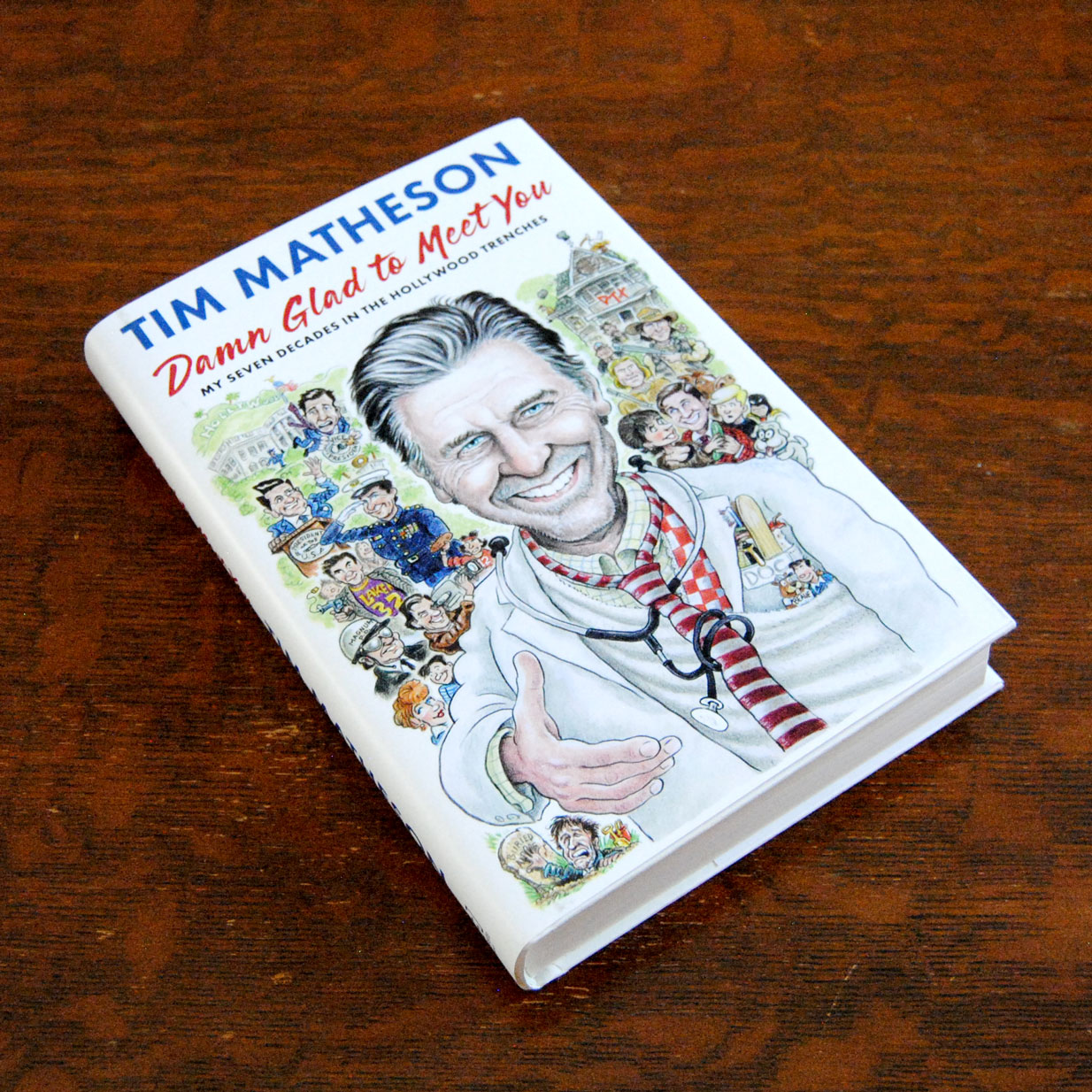
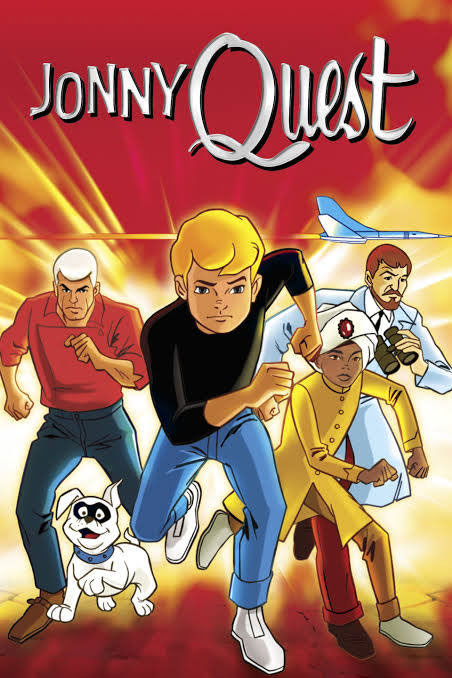
It feels like I have known Tim Matheson my whole life. The man is the voice of Jonny Quest, the actor behind Eric “Otter” Stratton, and Vice President John Hoynes. In between and since, I’ve seen him in Miami for Burn Notice and as an old curmudgeonly Doc in Virgin River.
Generally speaking these are my connections and touchstones to Matheson and his career.
I thought, therefore, that I knew what I was heading for when I cracked the pages of “Damn Glad to Meet You: My Seven Decades in the Hollywood Trenches.” But what I thought pales in comparison. Could it stun a team of oxen in its tracks? Ok, maybe it’s not Hoynes level stuff, but it is a long and winding tale that is entertaining and educational for anyone interested in Hollywood as an industry.
It is a book embodying the chaos of a long career in Hollywood. It is a “Film School Boot Camp” hosted by Tim. But it is also, at its core, a heartfelt and well told story of a boy who became a man and the industry he fell in love with. It may be an on-again, off-again industry relationship, but it’s probably worth at least a movie of the week on its own.
Matheson’s love of acting started early, and from Leave it to Beaver and Johnny Quest he had some early successes to really wet his whistle.
With Animal House, his fame reached new heights, and with The West Wing and Virgin River he finally achieved his massive acclaim.
In between, there were countless other titles. He was a constantly working actor, afterall. Black Sheep, Fletch, Van Wilder, 1941, and whatever else you happen to know him from that may be different from me. His IMDb is much better than your memory or mine, and even if you don’t know him from anything I’ve mentioned so far, you’d probably still be familiar with a project of his or two.
There are three parts to this book, his autobiography, his thoughts on the industry, and his “Film School Boot Camp.”
His autobiography is proof that, as he writes, “Entertainment is clearly an interesting–and small–world.”
It’s here that we get a glimpse of his relationship with the industry and thoughts on its evolution and where it is headed. His perspective on this is uniquely his own. He obviously has peers in the industry, but not many who’ve been in the industry for seven decades. Decades in which the industry he’s in has maybe had more change than any other time in its history.
I wished he was in the room when I read this part in particular, because I would have given him a hug and asked him if it was going to be ok, because I don’t know that it will be…
“Movies and TV shows often become line items on spreadsheets, and in that world, there is little room for artistic understanding, compassion, or support. The studios used to be run by people who were once filmmakers themselves or who appreciated and supported what filmmakers do. They believed in the magic of telling stories and telling them as well as they could. On a spreadsheet, the contribution of a great story makes little sense.”
The “Film School Boot Camp” is best described as sections throughout the book where he passes on what he has learned. Sometimes, they are lessons he is passing down from others, like Lucille Ball, John Landis, or Kurt Russell.
The two biggest lessons from the book I took away were about success and magic.
“It’s hard to do while you’re in the middle of things, but my advice to you is this: Appreciate each opportunity to love what you’re doing. The success of things is what you make it–whether it’s a hit or not is out of your control.” This is something I’m actively working on and I’m not even in Hollywood. If it’s hard for me as a blogger and podcaster, it would be even harder for someone in the industry, and perhaps an insurmountable task for someone trying to break into the industry.

But then I come back to this paragraph, and it’s all put into a specific perspective of happenstance and magic.
“Would The Godfather have been the same if James Caan had played Michael? Would Friends have worked with someone else playing Ross? Would Moonlighting have worked without Bruce Willis? Would Star Wars have worked with Christopher Walken as Han Solo? And . . . perhaps the Indiana Jones franchise wouldn’t have worked with Tim Matheson. This is the alchemy of Hollywood. Respect it–it’s magic.”
This book is a treasure, and while many actors before and many after have or will write their autobiographies for us, they don’t have to. When they do, they don’t have to teach us anything or share their insights. So when something like Matheson’s Damn Glad to Meet You is published, we should be thankful that people in his position are still willing to entertain, educate, and share with us a story as real as it gets: their own.
Read the Secret File of technical information and quotes from Damn Glad to Meet You.