
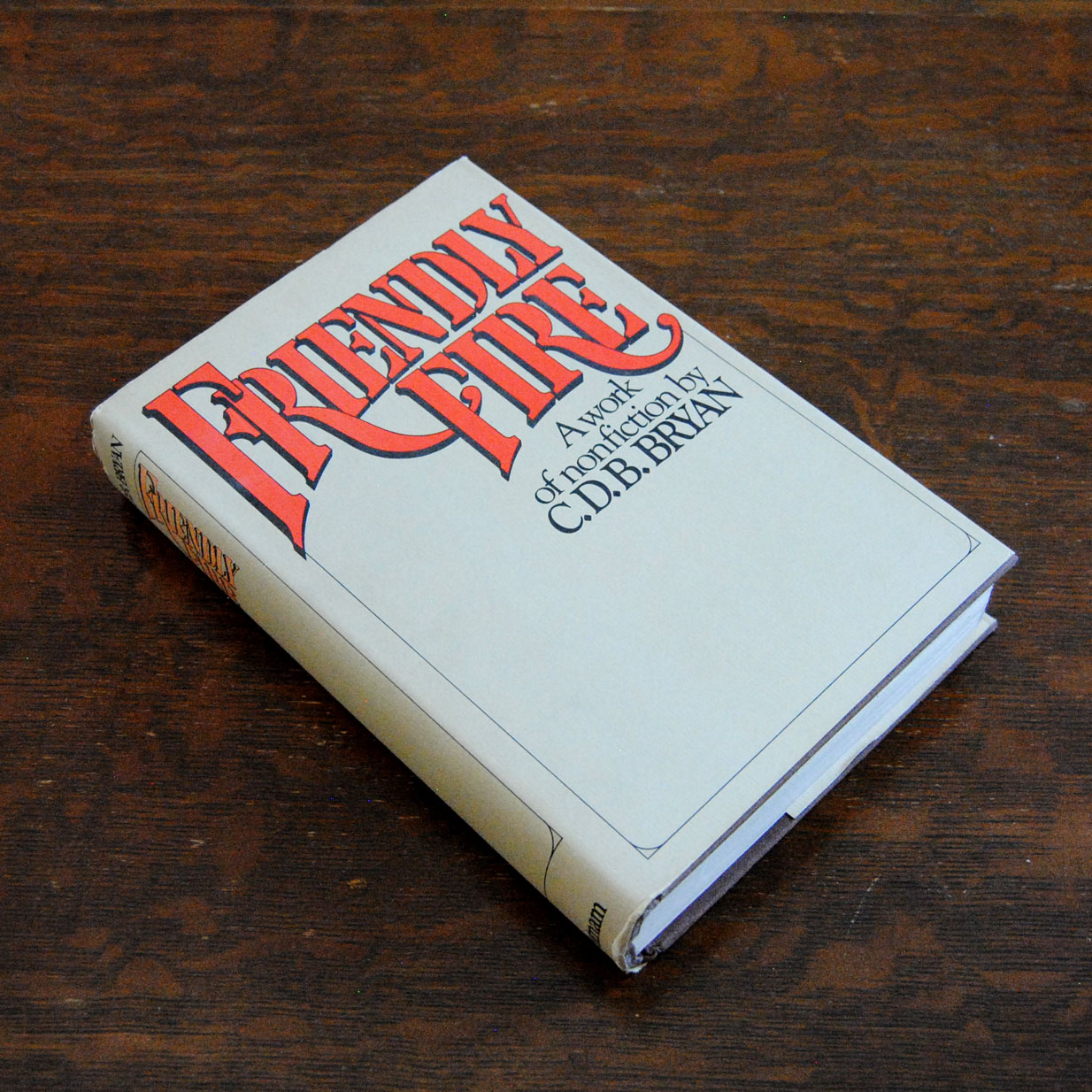
I don’t know if I should be amused, bemused, or depressed now that I’ve finished reading Friendly Fire by C.D.B. Byran.
The death of any young person is a tragedy, in war or peace. But the story of Michael Mullen, his death and the plight and anguish of his parents, as well as that of a nation unsure of itself, is the broader stroke of the book.
As the inside dust jacket reads: “Michael was to have been the fifth generation of his family to work the same 120-acre farm in Iowa’s Black Hawk County. Peg and Gene Mullen, his mother and father, are, in their own words, ‘typical working-class parents,’ ‘good, solid citizens,’ no different from others in their neighboring communities. And yet, because of their determination to discover what had really happened to their son in Vietnam, within one year of Michael’s burial they were under the surveillance of the FBI.”
The incident radicalized both Peg and Gene Mullen. As Peg says, after all, “There’s only one side when you lose your son.” The truthfulness and directness with which C.D.B Bryan writes is very journalistic without too much lane-changing into feature writing.
One passage which I think epitomizes the book is as follows: “The Mullens now knew that their son had been killed, in military terminology, by ‘friendly fire’ and was, therefore, a ‘nonbattle’ casualty as a result of an artillery incident officially referred to as a ‘misadventure’ in a war which was never declared.”
While author Bryan didn’t want to get involved, he felt he had to, and he ends up as another person within his own book to save the Mullens from, well, themselves. “The temptation to create ‘perfect endings’ was the corruption I wanted the Mullens spared. The only way I could achieve this was by finding out for them exactly what had happened to their son.”
Before he even endeavored to tell this story, he muses once he enters the book himself as more than just a third party narrator, “Still, I couldn’t help asking myself who was left in America who would be willing to read a story which in any way touched the Vietnam War. I certainly didn’t want to write one. Like everybody else, I was sick to death of hearing about Vietnam.”
Perhaps it is the Americana of Iowa that brings this story to us. Afterall, Iowa’s own Sullivan brothers are often associated as partial inspirations for Saving Private Ryan. And I discovered after finishing my reading of Friendly Fire that it was also made into a movie, with quite the star-studded cast, with Carol Burnett as Peg and Ned Beatty as Gene, to name just two.
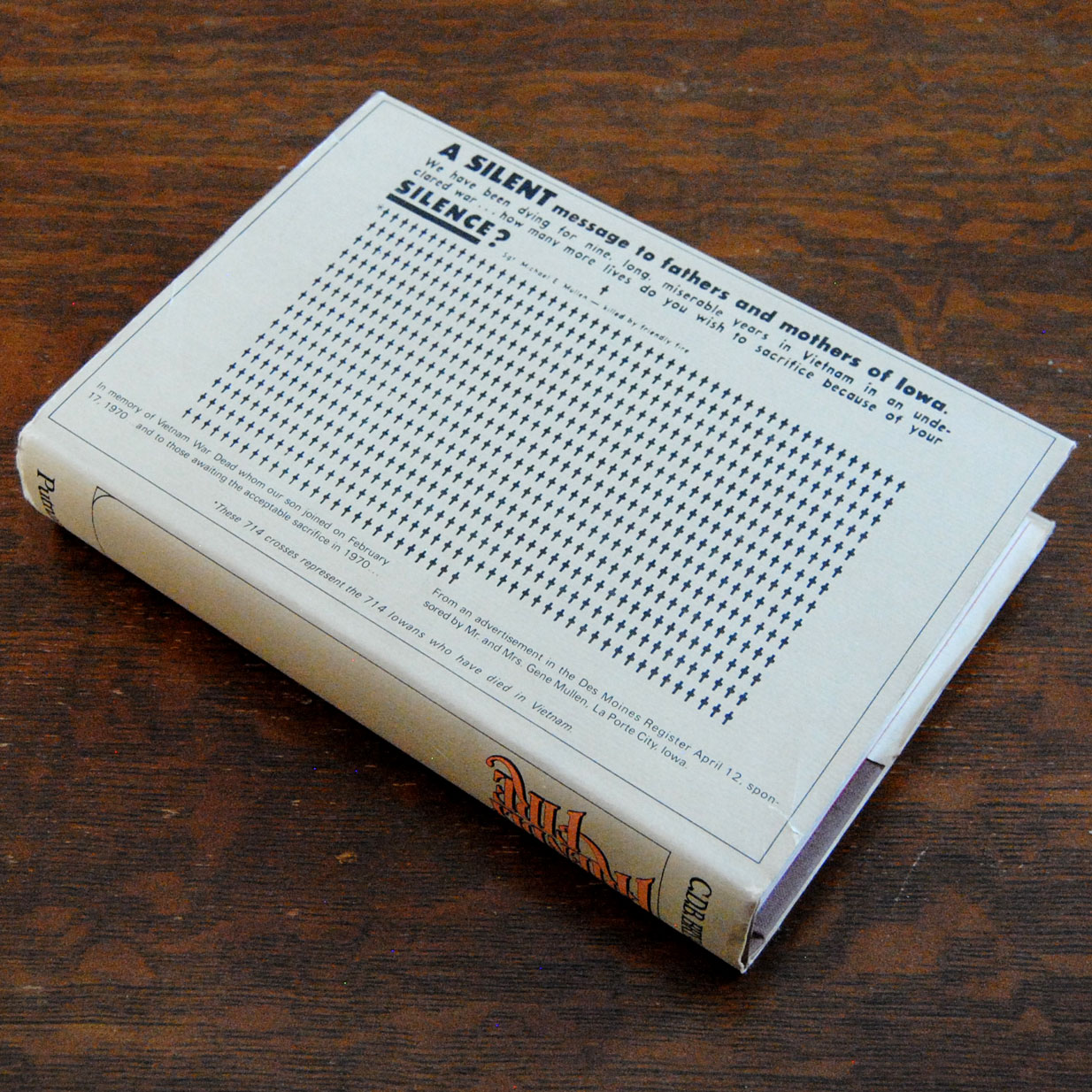
But it is perhaps the twist of author C.D.B. getting involved in the story himself that reveals the most. I appreciate that he intended a detached journalistic approach to Vietnam through the singular tragedy of the death of Michael Mullen, an All-American kid. But that he ended up examining Vietnam culturally and diving into the causes of the antiwar sentiment, as well as – and this is no exaggeration – truth, justice, and the American way, it’s more than just an examination of Vietnam. It’s an examination into the tumult of a certain time period in not just “America” but the most American of America: middle America.
Also, Michael Mullen’s battalion commander is none other than Lieutenant Colonel H. Norman Schwarzkopf, a name more familiar to me due to the television nature of the Gulf War. It is now, with the 20/20 vision of hindsight that I come to question a quote of Schwarzkopf’s from the pages of Friendly Fire. In the book he tells Bryan, “War is a profanity. It really is. It’s terrifying. Nobody is more antiwar than an intelligent person who’s been to war.”
But enough, let’s quickly explain my thoughts and how I land somewhere between amused, bemused, and depressed by this account. Well, the clear lack of direct communication from the U.S. government has always seemed to me like it was always more of a feature than a bug. It always seemed like it gave the government an extra layer of protection, especially the way it’s written about in this book. Conversely, it’s also on display every day during the Trump Presidency.
Secondly, and perhaps most importantly, we have on display the idea of real patriotism vs blind patriotism. As Gene Mullen most eloquently and succinctly puts it, “When your country’s wrong,” Gene said, “the real patriot damn well tries to do something about it!”
There’s a lot to unpack from Friendly Fire. While I may consider viewing the movie that is based on this book, I’m sure I’ll be revisiting and thinking about what I’ve read for a long time to come.
Is it an important book? Yes. Is it for everyone? If you’re someone who is curious, or who wants to make their country – no matter what country that is better – then, yes. I found this look into what the Vietnam War meant culturally to America far more intriguing than I would have considered before. That perhaps may be the greatest value this book has; One concrete tragedy set against the backdrop of a fractured culture.
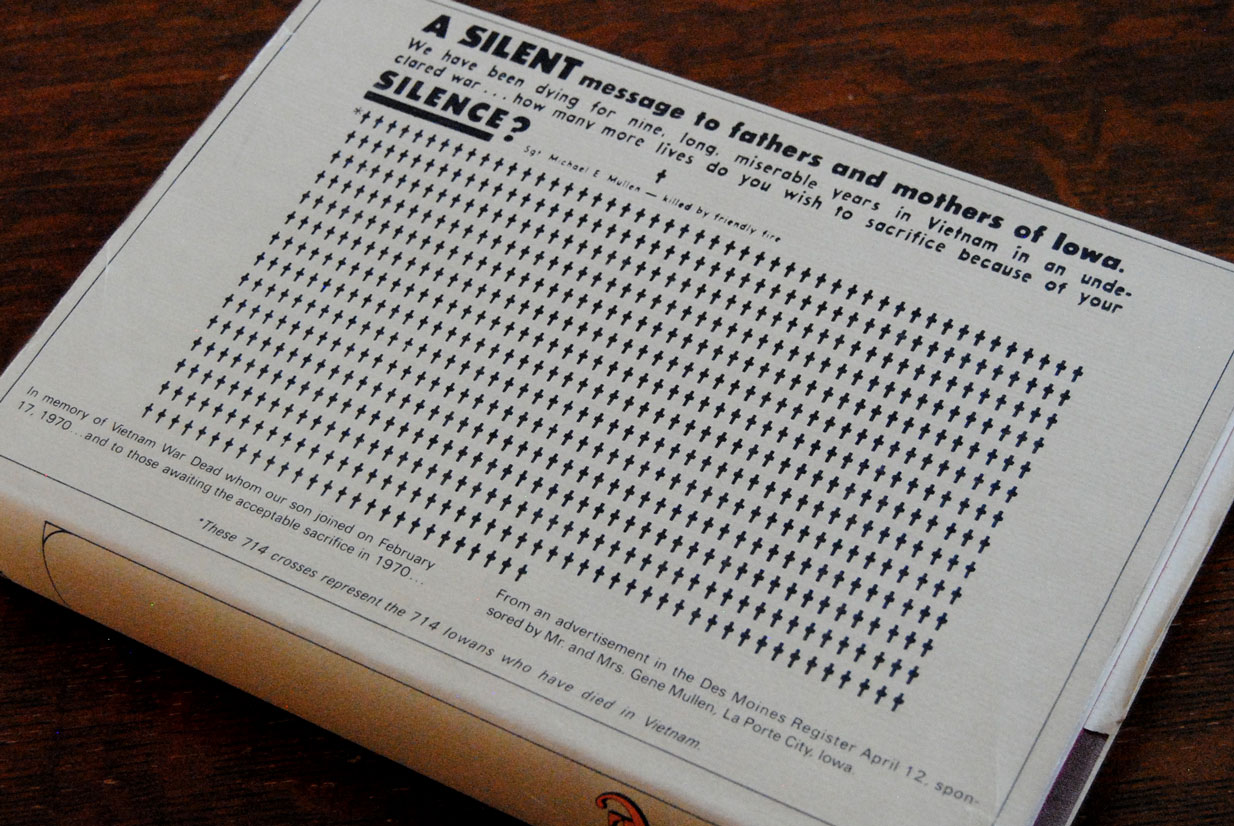
Read the Secret File of technical information and quotes from Friendly Fire.