
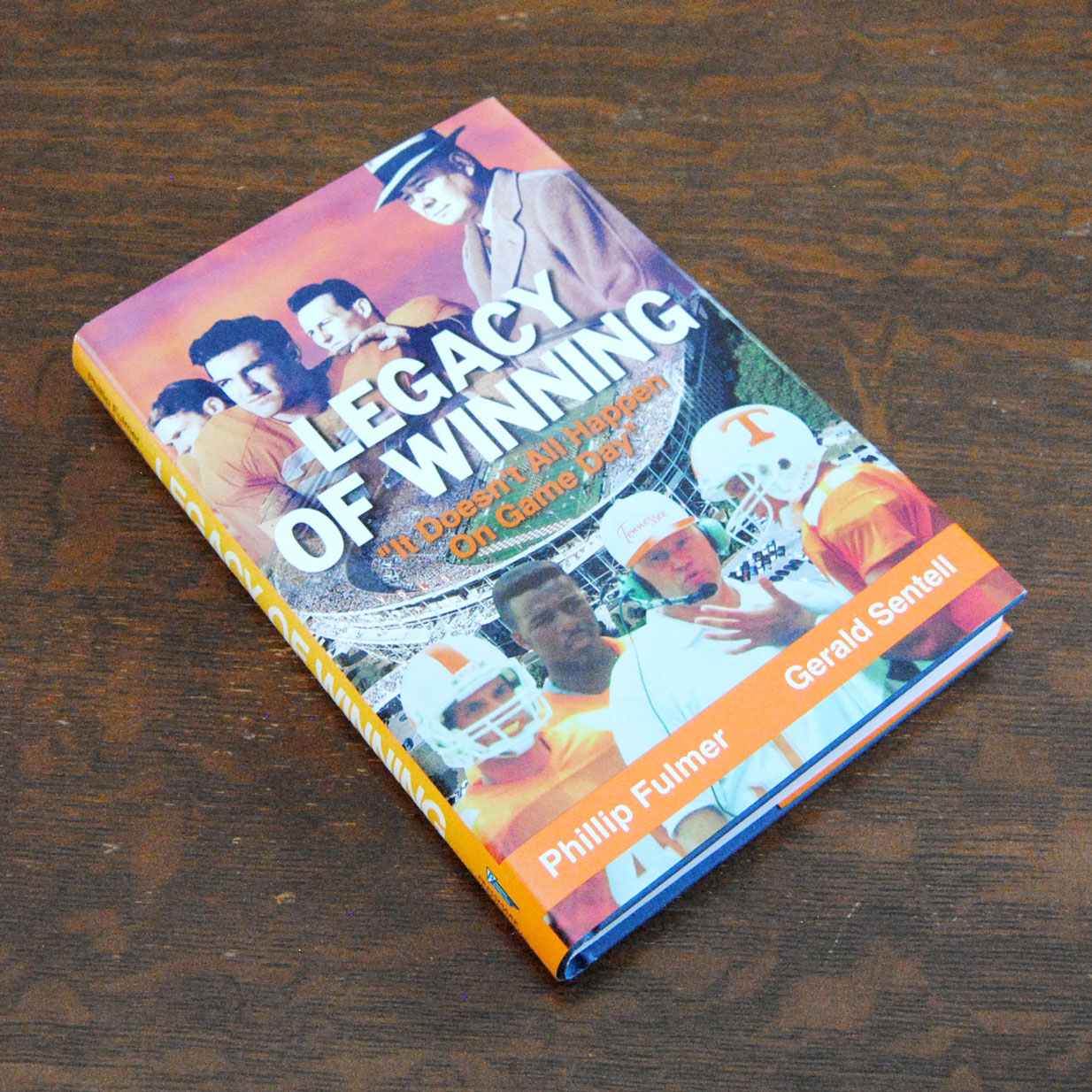
I’ve reviewed business books before. Usually, they are boring, outdated, lacking in reality, “do as I say, not as I do” affairs which I am surprised I ever let sit on my personal library shelves.
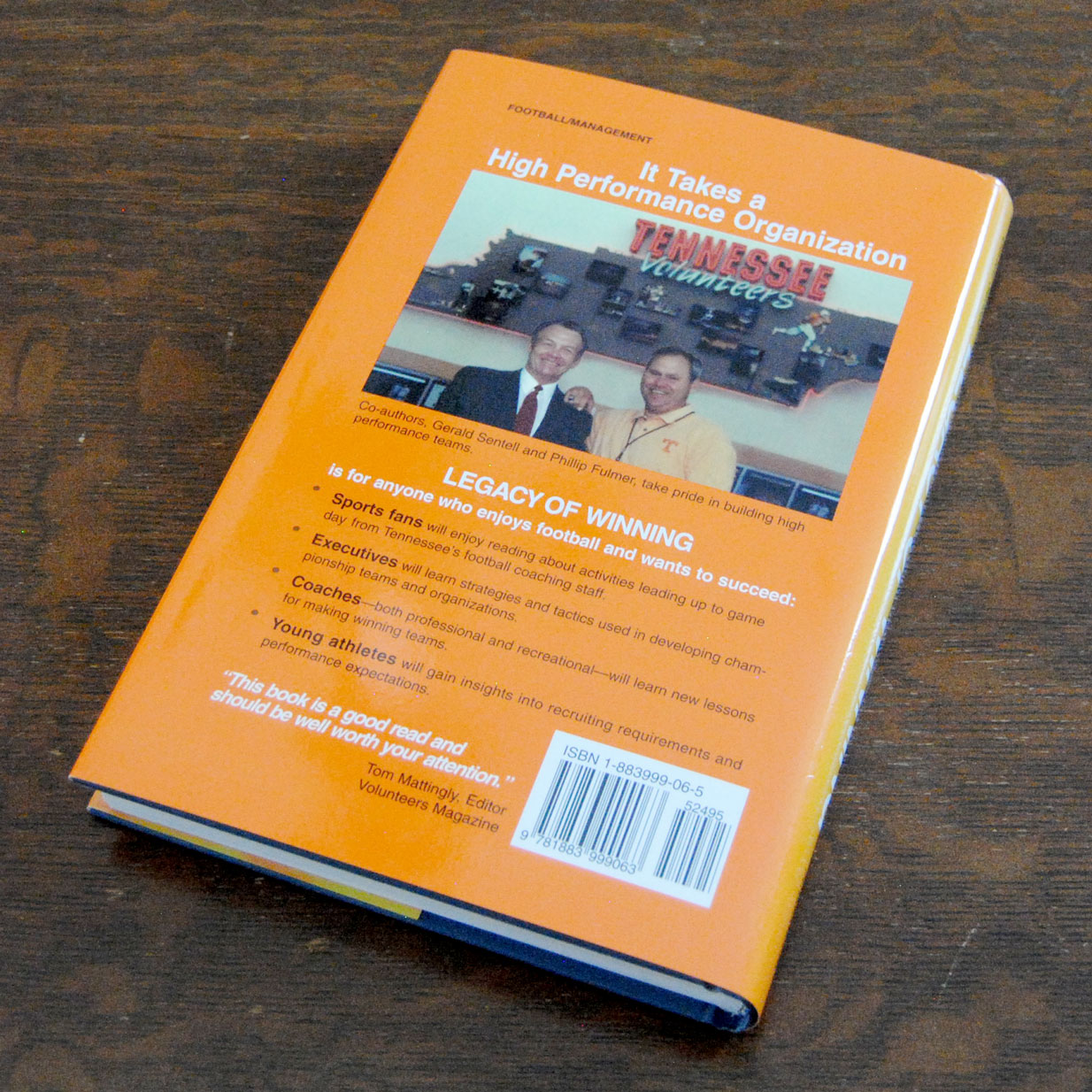
Thankfully, Legacy of Winning finally breaks that tradition. Here is a book that is co-written by then University of Tennessee Volunteers Football Head Coach, Phillip Fulmer, and Tennessee Associates International Chairman and CEO, Gerald Sentell.
Aside from some very solid generalizations about organization and leadership that should stand the test of time (and at least still feel relevant since this book’s 1997 publication), there is a behind the scenes look at what the machinations were for Coach Fulmer in running an elite Southeastern Conference (SEC) football program. The authors note how that experience relates to running a business, and the similarities between managing a college football team and a business overlap.
I am a fan of college football; perhaps you didn’t know that because you only read this blog, and I wouldn’t blame you. If you’ve heard me on The Palmer Files or remember the running bit I had with “Reasons Are Several, then Reasons Are Debatable” when they covered college football during the season, you may know.
I’ve been a fan of college football all my lifetime, which also overlaps with Coach Fulmer’s time at Tennessee. And while the recruiting is dated – anything before the current Name and Likeness Rights money (NIL) would be dated – this look behind the scenes is as up close as any you’re likely to find as to what it takes to run an SEC football program.
There’s a reprinted article Fulmer wrote when he was a student and player. There’s a great section written by then Tennessee Assistant Coach and Offensive Coordinator, David Cutcliffe, on his “Coaching Philosophy” that helped him go on to lead the Duke University football program for many years after he left Tennessee.
The book contains some sound business; it’s pretty standard stuff and the people who need to hear it probably won’t listen, and the people who already know it are probably looking for more.
In hindsight, the dated content does lend to some interesting things within the book. For example, I know who the QB was (Peyton Manning, the now super commercialized retired NFL Hall of Famer) but he and the other current players are not named. So if you pick up this book, know that the true freshman quarterback that impresses Coach Fulmer after stepping in after the first and second string quarterbacks (the second of whom was baseball Hall of Famer Todd Helton) was Peyton Manning.
And there’s also Haywood Harris, the Associate Athletic Director, Media Relations, who writes “In the future, it may become more of a challenge to keep Tennessee football in the forefront. With the arrival of the Houston Oilers, Nashville will become a professional sports city. We’ll just have to work a little harder to get intense coverage throughout the state. It’s up to us to take on that challenge and to do a better job than we’ve ever done before.”
Talk about a challenge on the horizon!
But the universality of this book lies in the business side.
- …high performance leaders know that “making sure the right things are done right” does not mean they become personally involved with everything going on.
- Empowerment is a frequently used but poorly understood term. To empower is to transfer sufficient authority so that individuals or groups can fulfill their responsibilities. In delivery processes people are empowered to fulfill the organization’s responsibility to the “customer.” In all internal processes people are empowered to fulfill the responsibility to the entities that receive the output of their process.
- One thing we all have to remember: It’s not important what the head coach knows or what the assistant coaches know; it’s what the players know that counts. All coaches must always stay within the framework of that fundamental truth.
- There is usually very little difference between being on top and being farther down in the standings. For example, a 10-year study of professional football teams showed that Super Bowl teams averaged one yard more per rushing play than teams that didn’t go to the Super Bowl. Such small differences between the best and the rest demonstrates why details are so important and every play is critical.
- The performance of U.S. organizations of all kinds has been the subject of intense criticism for more than two decades. These criticisms can be boiled down to the fact that most organizations–public and private, business and educational, government and non-government–have been “overmanaged and underled.”
- …as Theodore Roosevelt said, “The best leader is the one who has the sense enough to pick good people…and the self-restraint to keep from meddling with them.”
These things are applicable in the board room, on the gridiron, and anywhere else.
This book may be dated, but not in a way that renders it useless. This book would be immensely helpful to anyone looking to become a better leader. And if you happen to be a football fan, it’s got everything you ever wanted to know about how football used to be and, in a sense, the essence of what it takes to compete for a National Championship.