
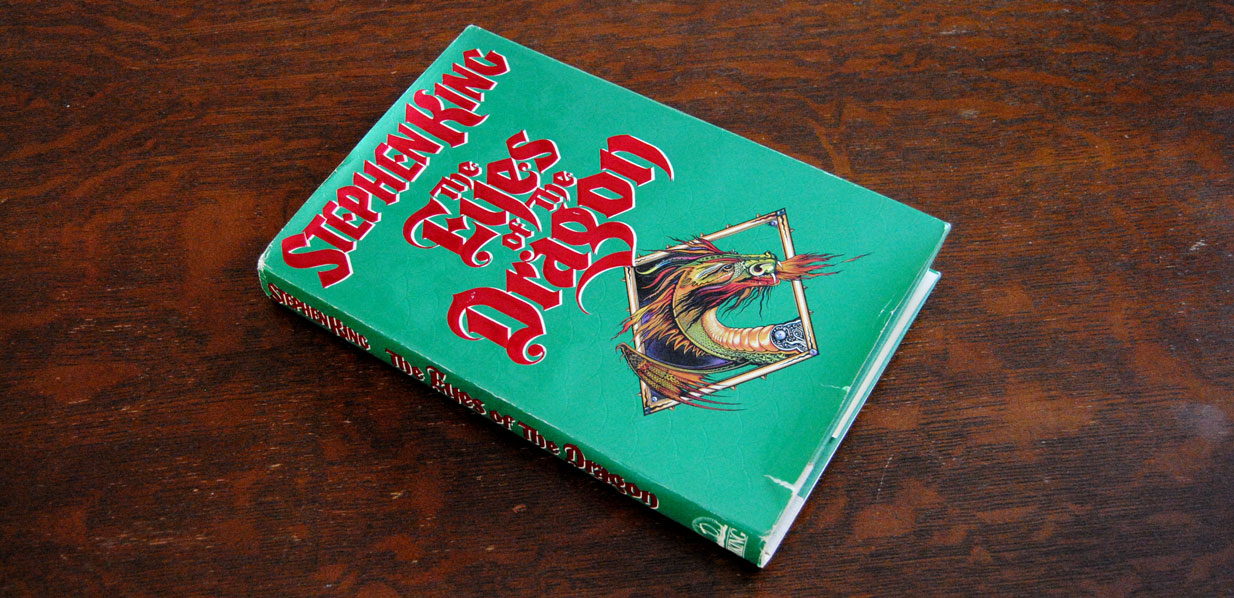
Stephen King’s foray into the realm of fantasy is about the Kingdom of Delain: a father, his two sons, and an evil magician.
King Roland is not long for this world as his magical advisor Flagg will see to it personally. But his oldest Prince Peter is wrongly accused of the crime of regicide. His younger brother Prince Thomas ascends to the throne, where Flagg can continue his grip of power from the advisor’s seat.
Seems kind of spoilery, but that’s all inside the dust cover! The story has a slow build, but that’s not to say it’s a slow burn. The setup is established within the first 50 pages, but we don’t really get to the wrongful imprisonment for another 100.
Part of that is the storyteller narrative, which I enjoy. King writes it in a slightly conversational style, so he jumps ahead or puts in an aside here and there, as if to say, “We’ll get back to that later.”
That slow start is really making sure we understand motivations and some reasonable background for the characters and what they believe to be logical ends.
But that slow start also mimics a bedtime storytelling style, which feels a bit meandering for the first half of the book, hinting at what’s to come with nods and winks. It’s something that our unnamed storyteller does regularly early on.
Then the book builds into a crescendo. So much happens in the last 50 pages that it feels – with our bedtime story analogy firmly in place – as if our storyteller is racing against time and sleep. One might get the sense that there is a fear that the audience is dozing off.
But this is my first Stephen King reading, and I was struck by how much heavy lifting I was doing. King describes the scenes in exquisite detail only when necessary, letting your own brain fill in the gaps, as he gives you the broad strokes.
This particular book was yet another gift from Bill Sweeney, who has heard me talk about books on The Palmer Files with people. Often, when Stephen King comes up, I would say that I haven’t read him. Bill knows my penchant for fantasy and equal lack of interest in horror, and he decided that this would be a way for me to indulge in some fantasy and read Stephen King.
I have to say, it was a great story. I enjoyed this book. I didn’t mind how long it took to really get going, but once it does, the last quarter of the book is truly seat-of-your-pants, do-not-put-this-book-down-until-the-end storytelling.
Because it’s written from a storyteller’s perspective, we jump between perspectives from chapter to chapter, with some chapters being only a few paragraphs long. This is something I’m familiar with from other authors. King’s use of this builds a strong timeline, jumping around at the right times to keep you guessing at the conclusions of as many as three or four individual perspectives or groups.
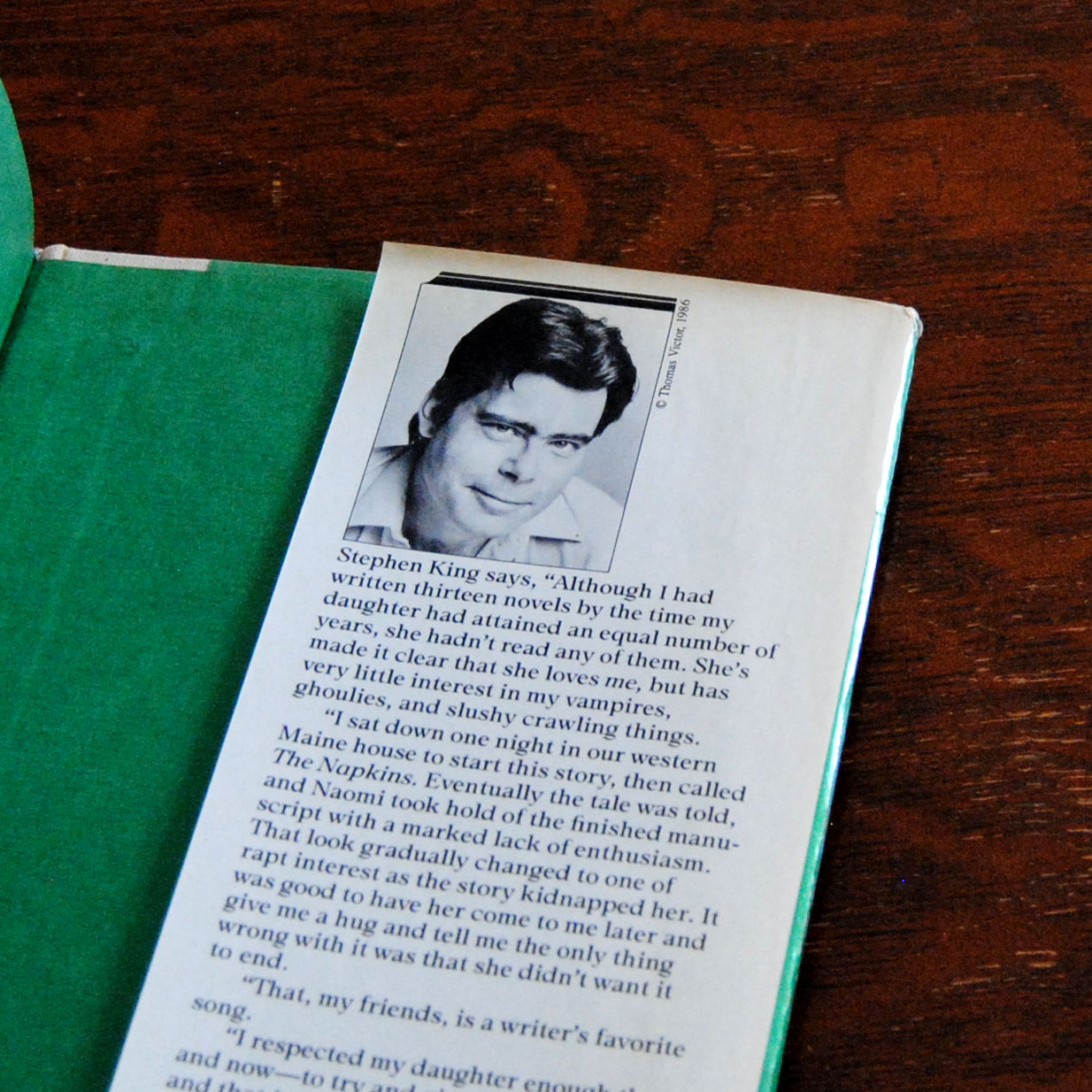
I don’t know that the rest of King’s catalog is for me, but I will quote something from the back inside dust jacket:
“I sat down one night in our western Maine house to start this story, then called The Napkins. Eventually the tale was told and Naomi took hold of the finished manuscript with a marked lack of enthusiasm. That look gradually changed to one of rapt interest as the story kidnapped her. It was good to have her come to me later and give me a hug and tell me that the only thing wrong with it was that she didn’t want it to end. That, my friend, is a writer’s favorite song.”
I am in complete agreement with Naomi, Stephen’s daughter, here. There could be more to the Kingdom of Delain, as the storyteller alludes to at the end. The fact that we didn’t get more may be a loss.
It’s kind of a shame that this story has a definitive ending. I felt like the kingdom of Delain and the wide world around it has more to offer. After finishing this journey, I’m not sure I will dive deeper into King’s catalog. As I said, horror isn’t quite my jam, but The Eyes of the Dragon is a great way to introduce Stephen King to people like me – folks who aren’t fans of one genre but still wish to understand what such a prolific writer has to offer.
The Eyes of the Dragon is a wonderful tragedy. That’s not so much a reflection of the book itself, but in that such a wonderful fantasy world only has this one entry.