
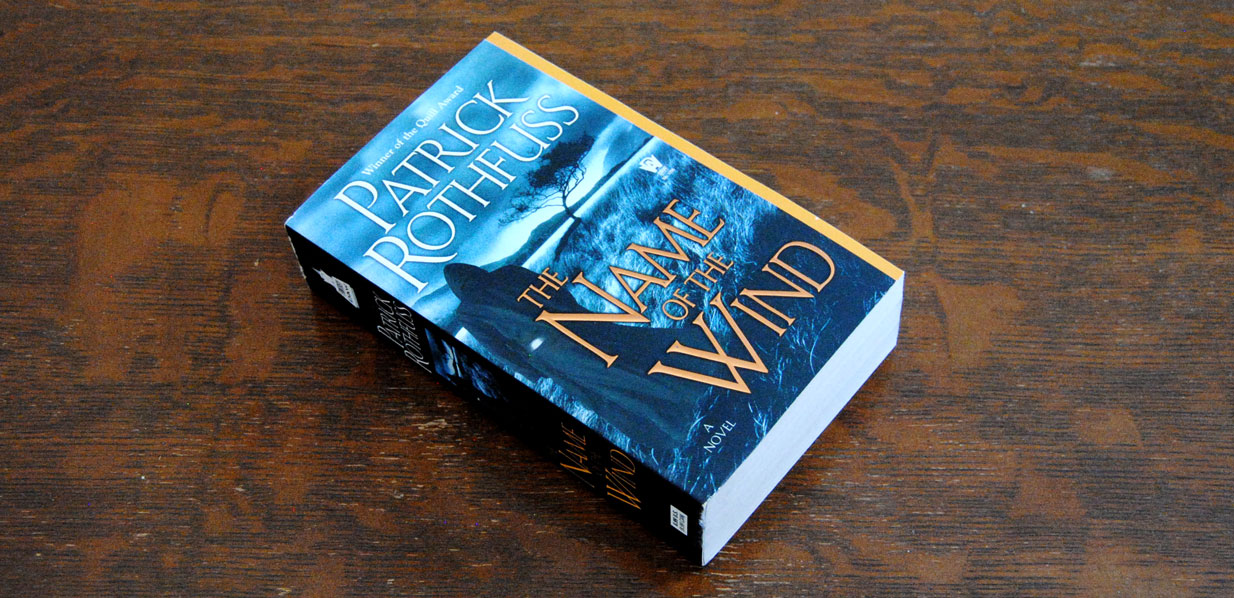
Name of the Wind is a wonderful coming of age story told with the hindsight of 20/20 vision.
It is the story of an innkeeper named Kote, formerly Kvothe, who with the help of a passing Chronicler, who happens to be the Chronicler, tells the story of his life, or at least a portion of it.
On the whole, it spends about as much time in the present of the book as Princess Bride does with the grandfather and his grandson. That’s not a criticism, but it’s a great way to set some expectations.
Speaking of expectations, depending on who you talk to, this book could be described as a modern masterpiece. I, for one, tend to agree with that sentiment – it is really good. Perhaps as far as contemporary high fantasy, it doesn’t get better than this on this side of the millennium. If not, it’s arguably in consideration.
I knew so little about this book before I cracked the pages, aside from some of my friends’ high regard. That’s odd, isn’t it? I knew it was good, and my friends, whose taste I trust, told me that this book was really good. But none of them described the book to me, at least not that I can remember.
Pathrick Rothfuss published Name of the Wind in 2007. I heard about it from friends about nine years later, and nine more years later still, was when I finally read it.
So what is it? It’s a fresh perspective on fantasy: not too old-fashioned, not too predictable, and with all of the elements that we want from good fiction and excellent fantasy.
It has a hero who is flawed and parables of standing up to the rich and powerful, being alone, feeling inadequate, wealth inequity, racial and class warfare, science versus art, and, above all, overcoming it all at any costs.
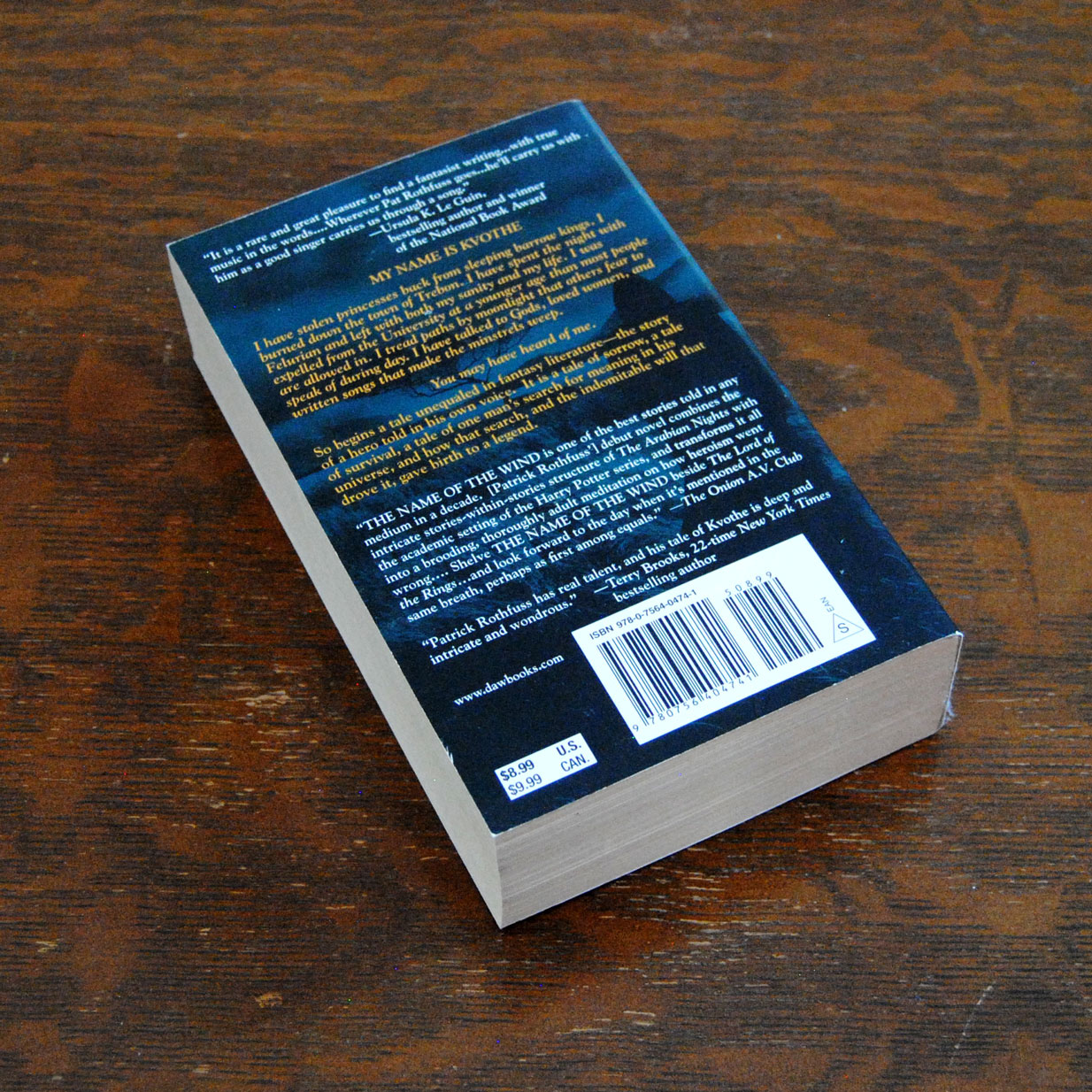
The back cover is slightly more detailed:
“My name is Kvothe.
I have stolen princesses back from sleeping barrow kings. I burned down the town of Trebon. I have spent the night with Felurian and left with both my sanity and my life. I was expelled from the University at a younger age than most people are allowed in. I tread paths by moonlight that others fear to speak of during day. I have talked to Gods, loved women, and written songs that make the minstrels weep.
You may have heard of me.
So begins a tale unequaled in fantasy literature—the story of a hero told in his own voice. It is a tale of sorrow, a tale of survival, a tale of one man’s search for meaning in his universe, and how that search, and the indomitable will that drove it, gave birth to a legend.”
If you, like me, had been hearing about this book from the many devout fans Rothfuss has cultivated and frustrated (more on that later), then you should pick up Name of the Wind. I am aware that this is the first book in a still unfinished trilogy. Rothfuss has published the second book and a few novellas set within the same world, but he has not as of this writing finished the trilogy.
Devout fans are fast to tell you how much they want more. I can understand why, though I don’t necessarily share their hunger. I enjoyed Name of the Wind very much, but while it ends like you would expect for the first book of a trilogy, it left me with questions. Mind you, my questions weren’t so burning that I am required to seek out the next book in the trilogy, The Wise Man’s Fear.
It is possible to enjoy this book on its own, but it’s nice to know there is more out there if I ever feel the need to revisit the world that Rothfuss has created. For now, Name of the Wind was enough. If you haven’t checked it out or are first learning about it here, do yourself a favor and pick it up.
Read the Secret File of technical information and quotes from The Name of the Wind.