
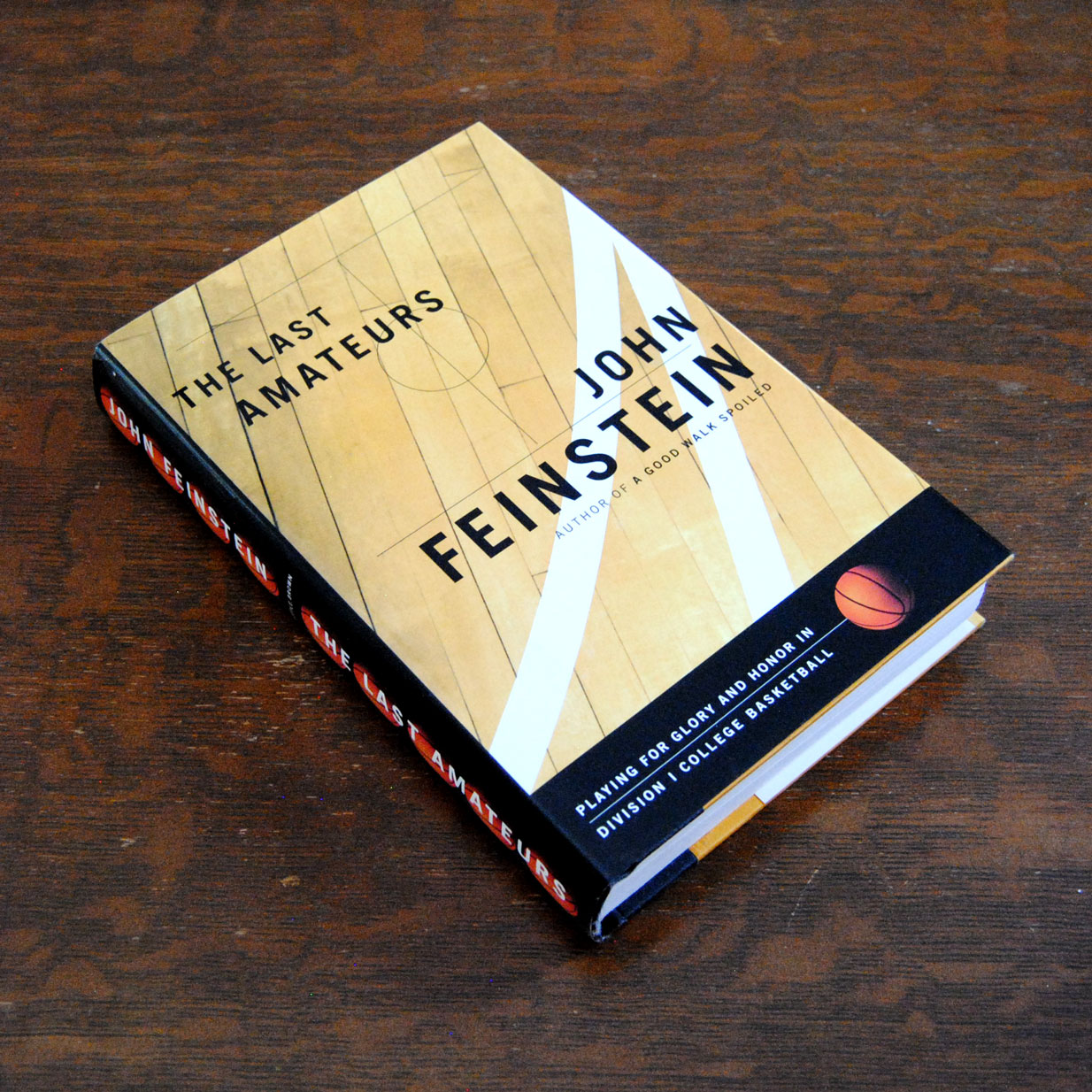
John Feinstein’s The Last Amateurs: Playing for Glory and Honor in Division I College Basketball is a love letter to amateur athletics and the notion of the unironic “student” athlete.
In the book, he chronicles the 1999-2000 Patriot League Basketball season. The Patriot League is something I guess I took for granted, as it is in my backyard. But for those who don’t know, it’s academically right up there with the Ivy League. The schools that were in the league during the season Feinstein chronicles were Army, Bucknell, Colgate, Holy Cross, Lafayette, Lehigh, and Navy.
And it was started because of the Ivy League athletic model: no athletic scholarships.
Now this has been a point of contention within the Patriot League at the time of The Last Amateurs publication, but things have changed. And that’s really what this book is now, a snapshot of a very particular point in time.
The irony to reading this particular book a quarter of a century after its initial publishing, or at any time in the future, is change. The start of this book is the start of the Patriot League, a group of schools getting together to follow the Ivy League’s athletic philosophy of no athletic scholarships, only “need-based financial aid.”
But while that was only starting to change during Feinstein’s time with the Patriot League for this book, it has since fully changed. While athletic scholarships may be more easily available in other conferences, they are also widely available in the Patriot League now. As a sports fan, you could argue that aside from the scholastic focus of these almost-Ivy League schools, this could easily be a book about any mid-major conference, even the Ivy League itself.
The reason is because of what Lehigh point guard Steve Aylsworth says about his collegiate career ending:
“I have to admit, though, there are times when I think I’d like to give broadcasting some kind of shot,” he said. “The hardest thing about being an athlete at a school like this is knowing realistically that college is the end of the road for you, that you’re here training to do something completely different, and yet you’ve been an athlete all your life and the thought of life without sports is a little bit scary.”
The point of this book, while maybe a bit heavy handed at times, is what Aylsworth is saying. When these athletes’ senior seasons end, so, too, does their athletic careers. Maybe that is still true for most of the athletes; a lot has changed, even in the Patriot League.
Over a decade after this book’s publication, Lehigh beat Duke in the first round of the NCAA tournament led by future first round NBA draft pick CJ McCollum. That’s not a sentence or sentiment that would have seemed reasonable to write in 2000.
The league’s games, while not on national television, are all televised on the Patriot League Network (PLN), which is now part of the ESPN conglomerate, so all games are available to stream. It’s not limited to football or basketball either, which is nice.
We’re getting off-topic, however.
The season in this book finishes with the Patriot League Championship game and, with it, the sentiment of the book that I believe Feinstein wanted to portray the most:
“This was college basketball. It wasn’t pros-in-training. There were real students on the floor, many of whom had actually been in a class a few hours earlier.”
Having read this book and drafted this review during the conference tournaments this year, I can’t imagine any of the big time conferences – the ACC, Big10, Big12, Big East or even some of the mid-major MAC, A10, MEAC, and so on – being in class before their conference tournament championship. That’s not just because many of these games are held away from campus on a neutral site, either.
Getting your ticket punched to the BIG DANCE, the NCAA tournament, may or may not lead to direct monetary increases for the schools and conferences. It is, however, worth all the gold in marketing and advertising, especially for smaller conferences like the Patriot League.
This past year, while reading this book, I had the opportunity to go to the Patriot League Championship game at Lehigh. Stabler Arena is much the same as it was described in Feinstein’s book, but the atmosphere was incredible and the stakes were the same as described in the 2000 Championship game. Except that, now, some of the kids on the floor for Lehigh or Boston University might be optimistic about the next game being their last in basketball.
That wasn’t actually the case this year in actuality, but they all believe. In fact, since even a team in the 16th seed has upset a number one seed, even leagues as small as the Patriot League believe they can survive and advance.
Perhaps, the idea of Patriot League audiences being entertained by future NBA players is the biggest change in the last quarter century. There’s probably at least one Lehigh player who’s looking to follow McCullom to the NBA, and even one single player with those aspirations was a stretch too far 25 years ago.
Read the Secret File of technical information and quotes from The Last Amateurs.