
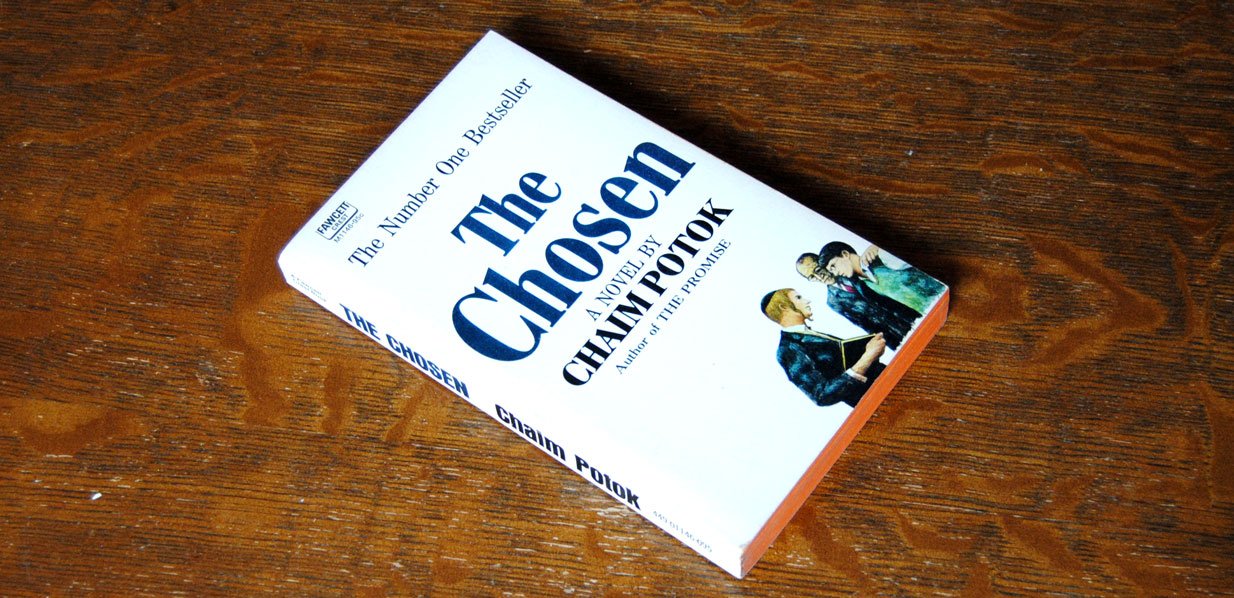
While it is uniquely and overtly Jewish in the details of the story, Chaim Potok’s The Chosen is also about growing up in a house with a doctrine that is similar to your friend’s but not the same.
Our main protagonist, Reuven Malter, is only different from his friend Daniel Saunders in their outward appearance and their inward philosophies. To the rest of the world, they are both Jewish. That’s an important thing that is not directly stated, but it’s important to remember.
The story focuses on the friendship and upbringing of Reuven and Danny as they grow up side-by-side. It starts when Danny hits a baseball that Reueven catches with his face, driving a piece of his eyeglasses into his eye.
That’s legitimately how their friendship starts, and we get to see it all through their fathers and their education, which concludes with them being in the same school after high school.
I understand how, aside from everything else, the origins of their friendship may seem odd. As someone who briefly became enamored with the origins of my own friendships, most of the time, they convalesce without such an obvious before-and-after as a baseball hitting someone in the head.
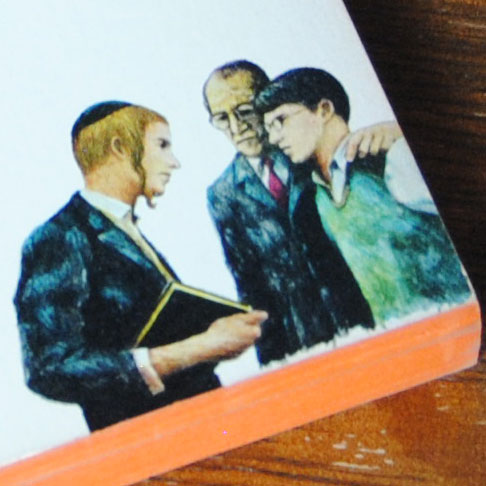
The cultural and religious importance of Potok’s story is not just in friendship. It is more deeply rooted in Jewish cultural identity and survival in America following the atrocities of World War II. In that, it is not only an important cultural document but one that can still find relevance to today’s first-time readers, such as myself, even in my middle age.
Since the attacks of October 7, 2023, and everything that has happened since, Rueven’s father’s statement that, “The Jewish world is changed,” has taken on a new meaning, especially to American Jews.
American Jewry is now beset on all sides. It’s not just in the rise of anti-semitic hate, which was on the rise before the attack. The outside, after all, is not discussing the concept of Zionism as it sadly equates the religion of Judaism, Jewish culture, and Zionism as three indistinguishable and intertwined things.
This is not the case. Potok’s own characters’ families are split on the idea of Zionism, even before the birth of the nation of Israel. For American Jews, it’s something that is complex, which is expressed well here. The discussion which has perhaps subsided since Israel’s independence is now back on the front burner, in the spotlight and on the lips of many who have just joined the conversation, even if that was only five minutes ago.
I spent time in Israel, and I have friends in Israel. I am a cultural and spiritual Jew, though not as religious or observant as some of my more conservative or orthodox friends would have me be. And that means that, being in my middle age, Israel has not only always existed for me, and I took it for granted.
I’m conflicted about Israel, which I will admit here, but I won’t go further into detail for now. I bring it up because The Chosen has not clarified anything for me, like I thought it might when the Zionism sides were drawn within the book.
Still, it goes to show just how important literature can be when it can be written about one thing and applied to another – even without shining a light on the answer.
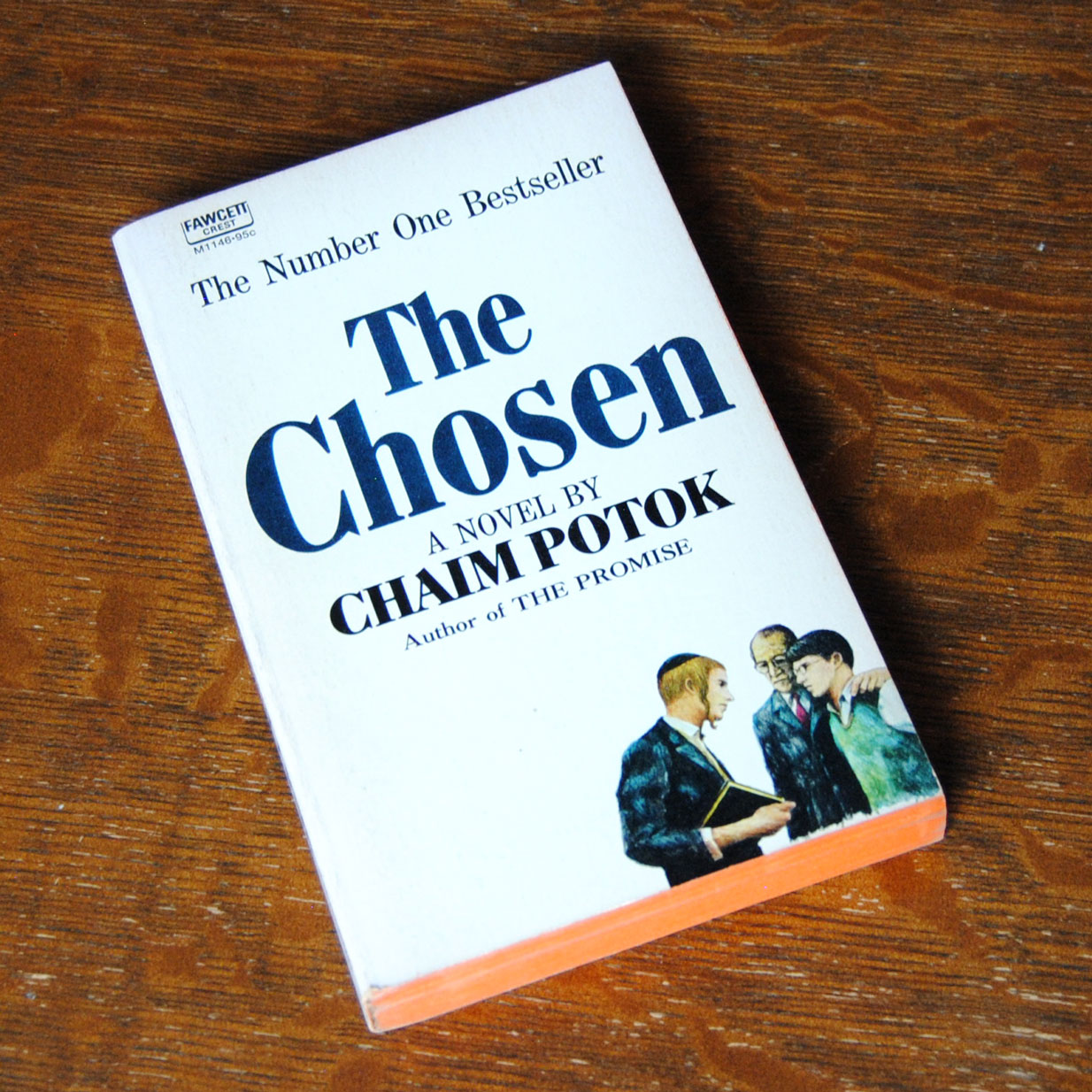
We live in a complex world. Nothing is ever going to be as simple as it once was. And that doesn’t just go to the complicated nature of Zionism within The Chosen. It also goes back to the friendship at the heart of this novel.
Being on two sides of a religious coin can be complex at the best of times. Not all Judaism is equal in the eyes of Jews, and I know that to be true. But as always, the discussion that needs to be had is often never started. This is true in the case of complicated friendships, world events, politics, or anything that seems difficult. It’s often easier to NOT talk about it, though it’s almost always better if we do.
Anyway, I loved The Chosen. I honestly can’t believe it took me this long to get to it.